Tag: UNIKOM Bandung Campus

  • Welcoming a New Generation: Rector Urges Students to Be Creative, Innovative, and Adaptive in the AI Era at 2026 Unikom’s Open Senate Session for New Student Admission

    Welcoming a New Generation: Rector Urges Students to Be Creative, Innovative, and Adaptive in the AI Era at 2026 Unikom’s Open Senate Session for New Student Admission

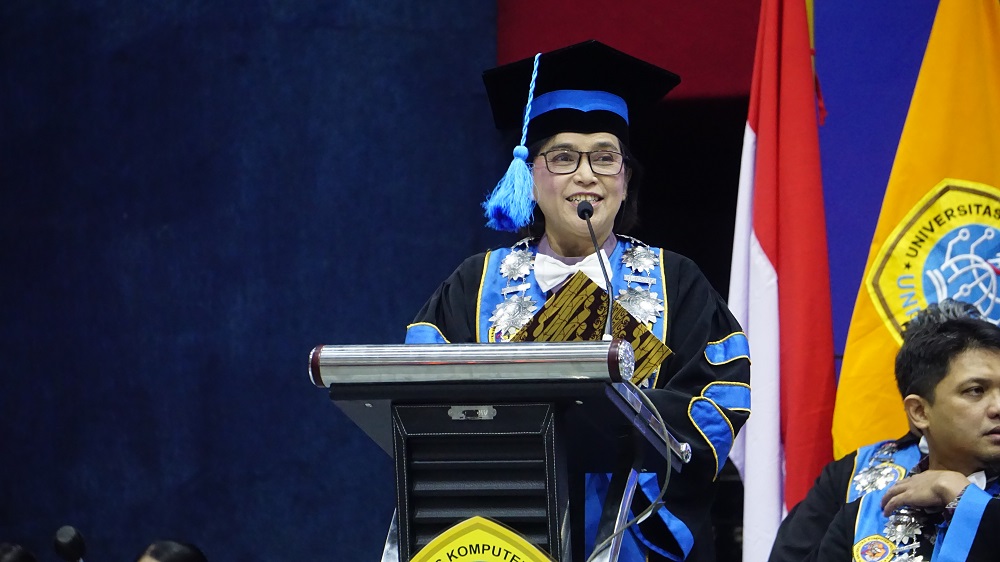
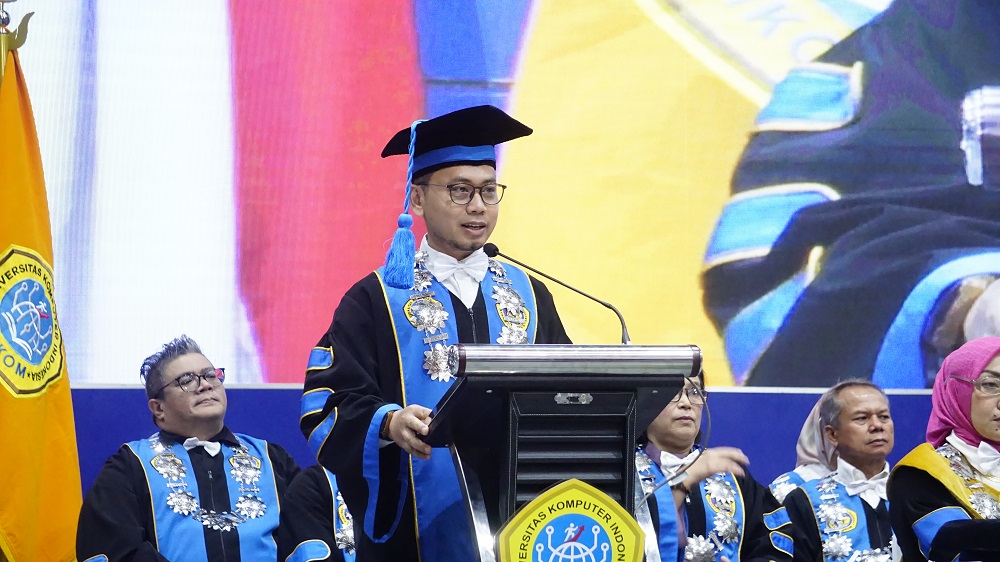
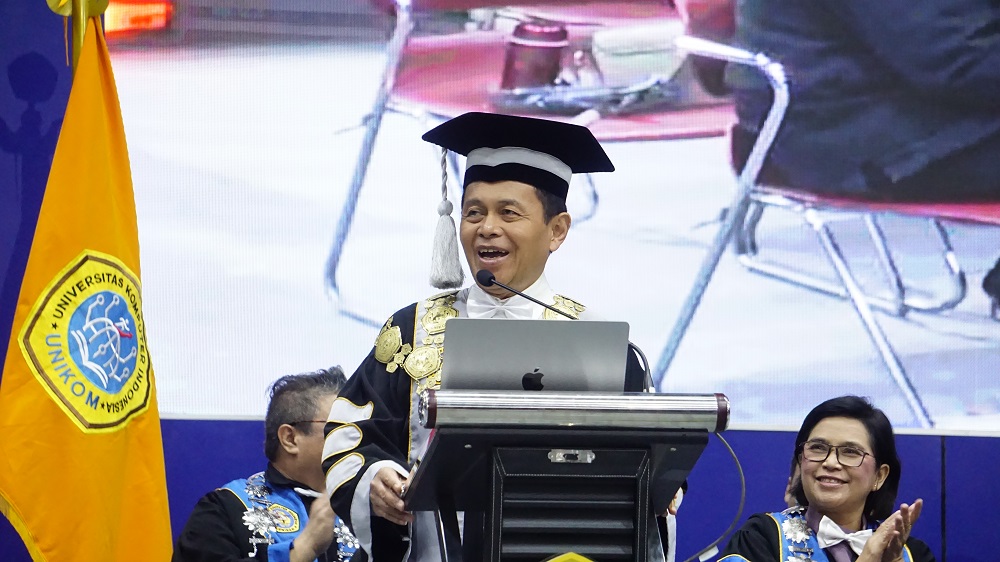
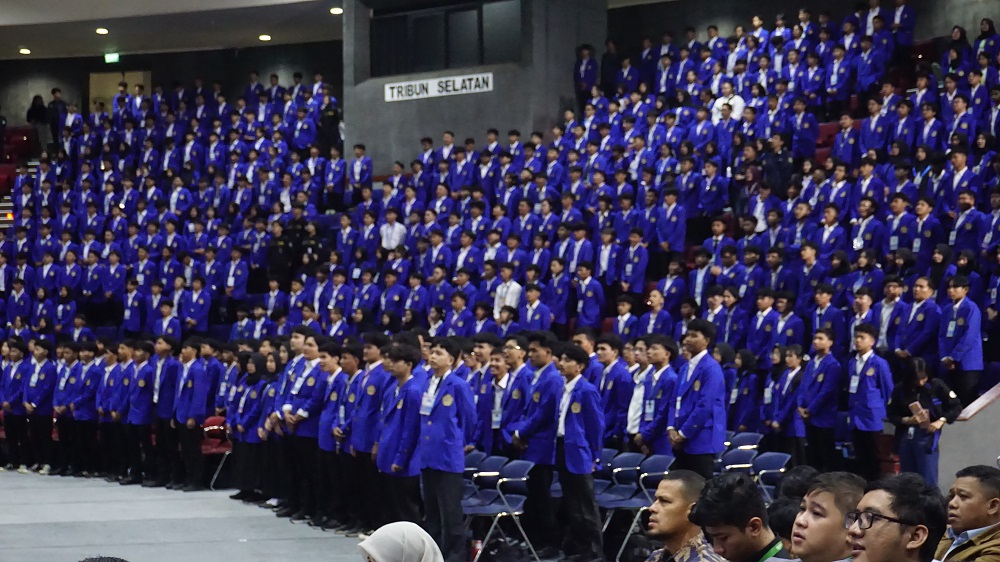
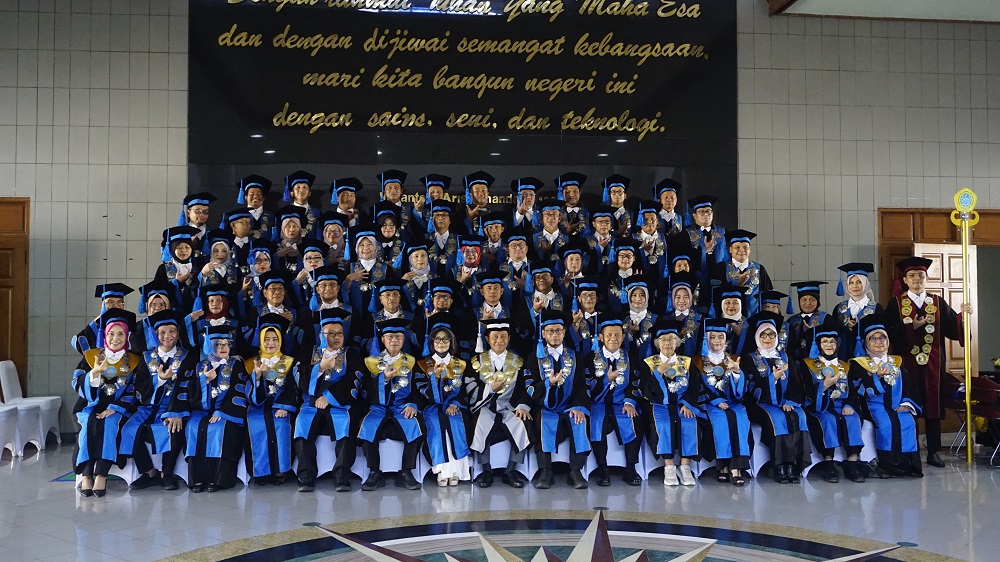
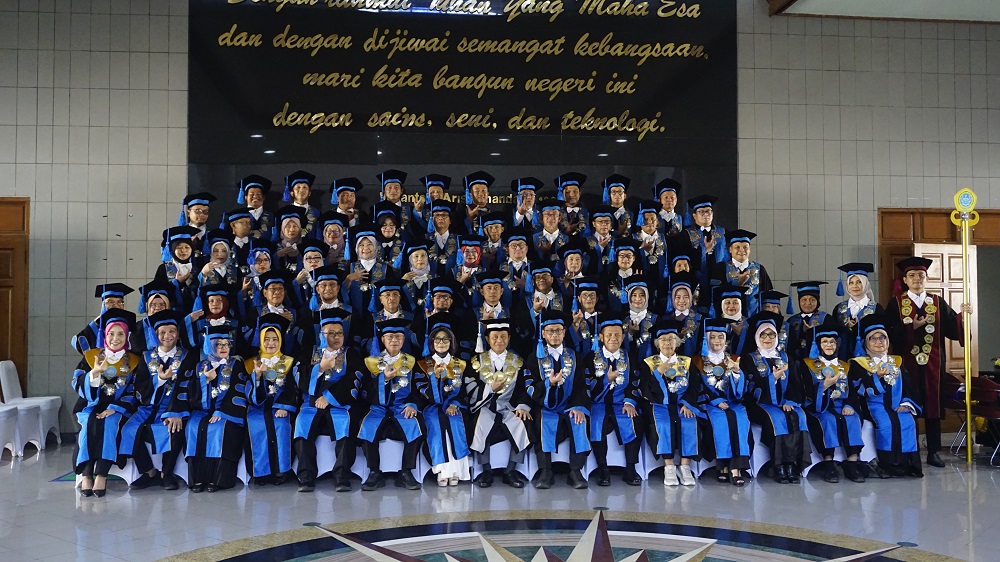
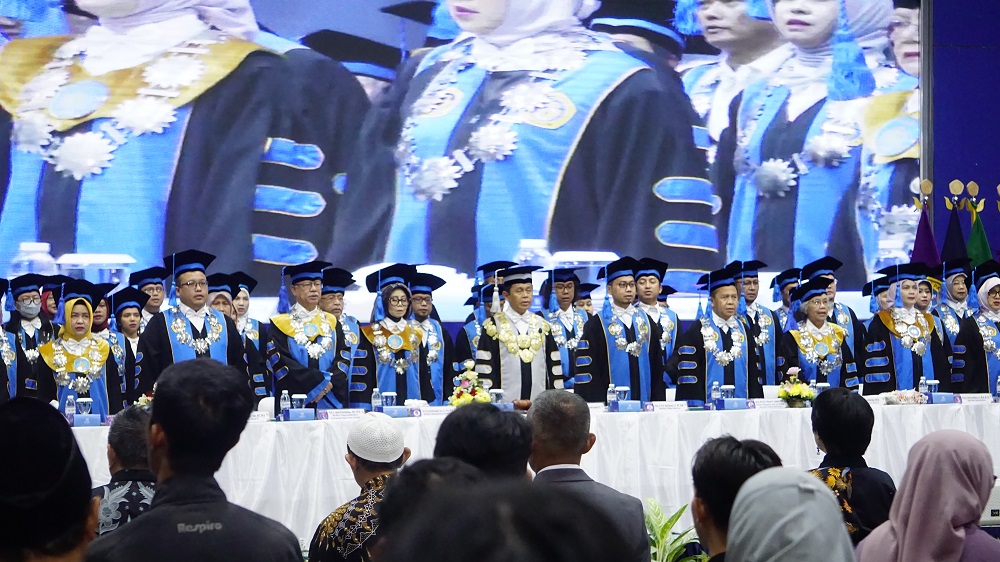
    BANDUNG, UNIKOM — Entering higher education marks a special milestone for new students at Universitas Komputer Indonesia (UNIKOM). On Monday, September 21, 2026, UNIKOM held an Open Senate Session for the Admission of New Students for the 2026/2027 Academic Year alongside the commemoration of UNIKOM’s 26th Anniversary. The event was attended by university executive leadership, the academic community, and incoming students at Sasana Budaya Ganesha (Sabuga) ITB.

    Embodying the spirit of welcoming a new generation, the event featured an agenda combining academic orientation, formal matriculation, student value reinforcement, and recognition of outstanding achievements across the university.

    Dr. Ir. Yuni Mogot, M.Si., CPR., as a Chair of the UNIKOM Open Senate Session Organizing Committee, stated in her report that this year’s New Student Admission and Campus Life Orientation (PKKMB) runs from September 21 to 26, 2026. The program spans multiple locations, including Sabuga, the UNIKOM campus on a hybrid basis, the Balai Sartika Building, and individual faculties and study programs. “This orientation aims to introduce new students to our academic environment, core institutional values, and campus culture while equipping them to begin their journey as outstanding scholars,” she noted.

    Dr. Yuni expressed her gratitude and highest appreciation to the Rector of UNIKOM, Prof. 3. Prof. HC. Dr. Ir. Eddy Soeryanto Soegoto, M.T. executive leadership, committee members, the Protocol Team, and student organizations including KPM, PSM, SADAYA, and KSR, for their dedication and teamwork. Appreciation was also extended to all supporting parties, including Sabuga Management. “May this orientation serve as a promising start and a valuable experience for new students as they work toward future success,” she concluded.

    Meanwhile, Assoc. Prof. Dr. Agus Riyanto, S.T., M.T., CSBA.,  as the Head of New Student Admissions for the 2026/2027 Academic Year, reported that admissions were conducted across eight waves of computer-based entrance examinations from January to August 2026. Beyond entrance exams, UNIKOM offered admission tracks based on high school report cards, academic and non-academic achievements, the KIP scholarship program, and scholarships for children of teachers. The selection process leveraged digital technology through a transparent system that included online examinations, interviews, and portfolio assessments.

    Through these tracks, 1,552 students were admitted for the 2026/2027 Academic Year. The cohort represents various regions across Indonesia and international students from countries including Egypt, Madagascar, and Australia. Dr. Agus expressed hope that incoming students will adapt to the academic environment, actively participate in campus life, and utilize technology to develop their potential as agents of change.

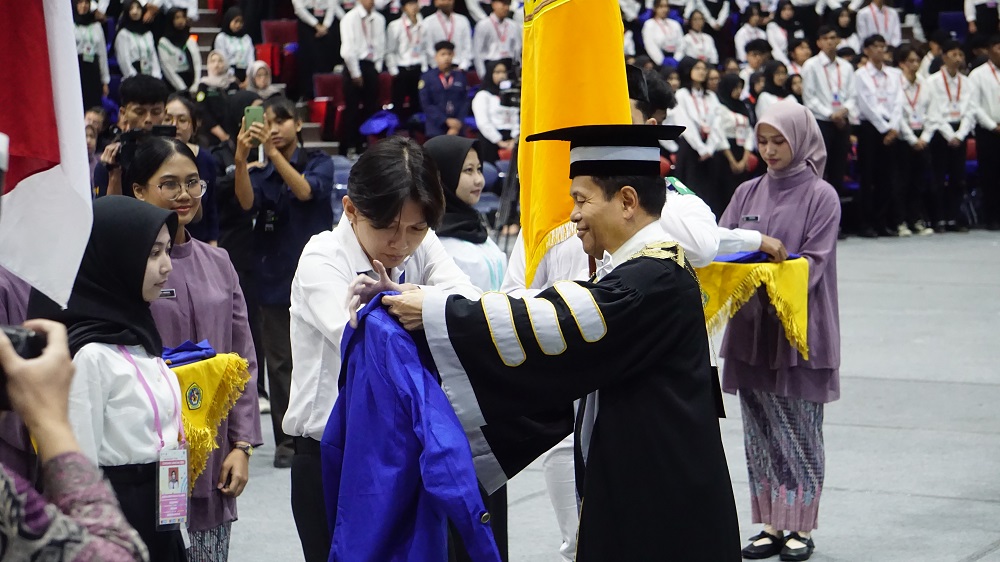
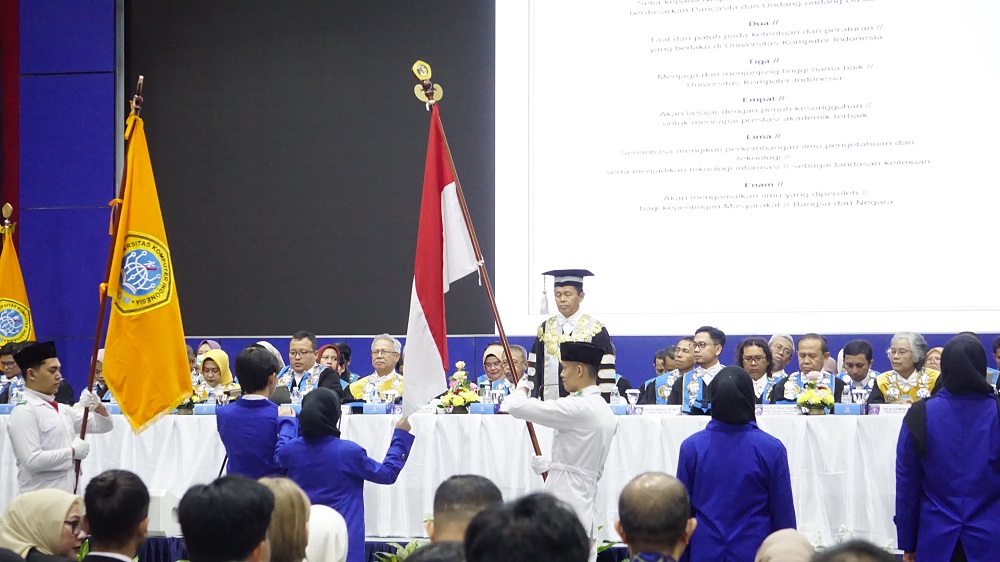
    A pivotal moment during the ceremony was the official inauguration of incoming students by UNIKOM Rector and Chairman of APTISI West Java, Prof. Dr. Ir. Eddy Soeryanto Soegoto, M.T., marked the student pledge led by student representatives. The ritual symbolized the official start of their academic journey as members of the UNIKOM community.

    Opening his address, Prof. 3. Prof. HC. Dr. Ir. Eddy Soeryanto Soegoto, M.T., expressed gratitude for the opportunity to gather and welcome students across all degree programs. Coinciding with UNIKOM’s 26th Anniversary, Prof. Eddy encouraged the new cohort to use their time at UNIKOM to build core competencies and prepare for an increasingly dynamic global landscape.

    Prof. Eddy emphasized that academic capability and digital literacy alone are insufficient. Students must also foster an entrepreneurial mindset, creativity, innovation, and the ability to create value through technology. This message aligns with UNIKOM’s identity as a Digital Entrepreneurial University, which advocates integrating digital technology into education and daily life.

    In light of rapid advancements in Artificial Intelligence (AI), students were urged to adapt and utilize technology responsibly. According to Prof. Eddy, AI unlocks vast opportunities, spanning learning, research, data analysis, software development, and innovation. Consequently, students must prepare themselves not merely as consumers of technology, but as creators of new solutions.

    UNIKOM demonstrates this commitment by developing an AI-based learning ecosystem and collaborating with Google. The UNIKOM AI Learning Center/AI Lab serves to equip the academic community with practical AI capabilities for education and research.

    “You are creative,” Prof. Eddy emphasized to the cohort, defining creativity as the ability to generate original ideas and innovation as creating distinct value compared to existing solutions. He expressed hope that this mindset will flourish inside and outside the classroom. Furthermore, Prof. Eddy reminded students to use technology ethically, particularly when completing assignments, theses, and dissertations. Digital tools and AI must support learning rather than compromise academic integrity.

    Equally important, students were encouraged to join campus organizations to build leadership, communication, teamwork, and social skills essential for professional life. Prof. Eddy offered actionable advice for new students: cultivate strong determination, stay motivated, remain persistent, practice discipline, channel youth energy productively, foster innovation, build an entrepreneurial mindset, and utilize AI technology productively.

    During the session, Prof. Eddy introduced university leaders and faculty members who will guide students throughout their studies, helping newcomers navigate the institution’s academic and administrative structures.

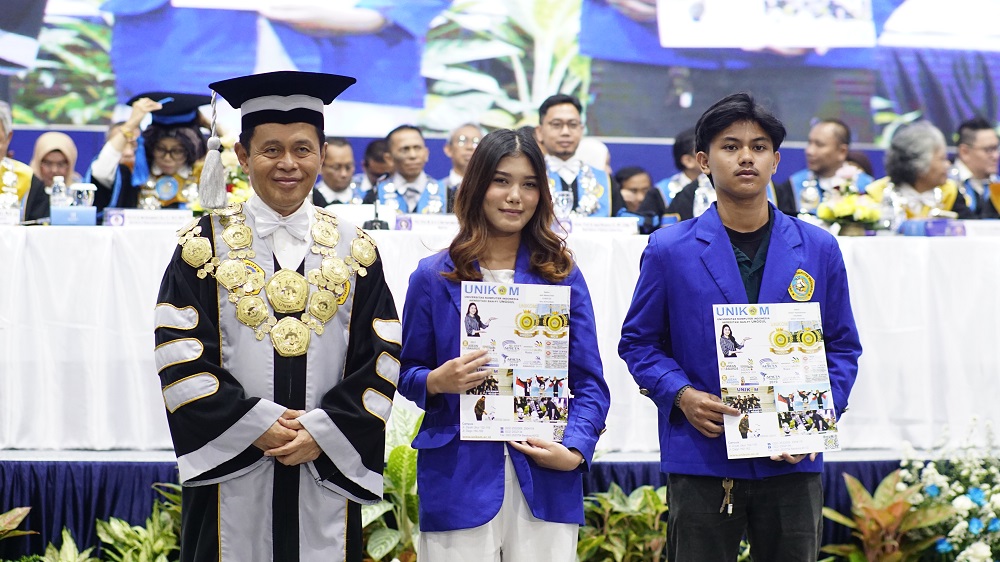
    Beyond serving as a welcome ceremony, the event recognized contributions across the university. The program included remarks from Bank Negara Indonesia (BNI), BNI scholarship presentations, and awards for high-achieving students.

    Recognitions continued with awards for exemplary faculty and staff members, alongside honors for 25 years of service to UNIKOM, celebrating the university’s growth and honoring the dedication of its personnel.

    For new students, the event illustrated that the UNIKOM experience extends beyond classroom lectures. The university’s ecosystem offers opportunities for academic achievement, organizational leadership, cross-disciplinary collaboration, and digital skill development. Following the Open Senate ceremony, students participated in orientation briefings covering the Prevention and Handling of Violence in Higher Education Institutions, UNIKOM’s vision and mission presented by the Quality Assurance Directorate, and orientation sessions from various campus divisions.

    These sessions introduced students to university units and services, including INBISKOM, the AP2SC Directorate, HITS UNIKOM Radio, the King Sejong Institute, the Directorate of International Affairs & Cooperation, the PTDSI Directorate, the IT Infrastructure & Network Directorate, and UTV. Through the Open Senate Session for the 2026/2027 Academic Year, UNIKOM officially welcomed its incoming class. The event also marked UNIKOM’s 26th Anniversary, reflecting on the university’s history while looking toward future opportunities in higher education.

    With the conclusion of the open session, a new chapter begins for UNIKOM’s newest students. Incoming students are expected to maximize their time at UNIKOM to emerge as entrepreneurial, adaptive, principled, and competent leaders prepared for an increasingly tech-driven world.

    Welcome to the Universitas Komputer Indonesia. (Directorate of Hms & Pro)
  • UNIKOM’s Majelis Ta’lim (MT) Ashfiyatun Nisa Islamic Study Session Encourages Implementation of Islamic Values in Daily Life: “Islam but Not Islamic”

    UNIKOM’s Majelis Ta’lim (MT) Ashfiyatun Nisa Islamic Study Session Encourages Implementation of Islamic Values in Daily Life: “Islam but Not Islamic”

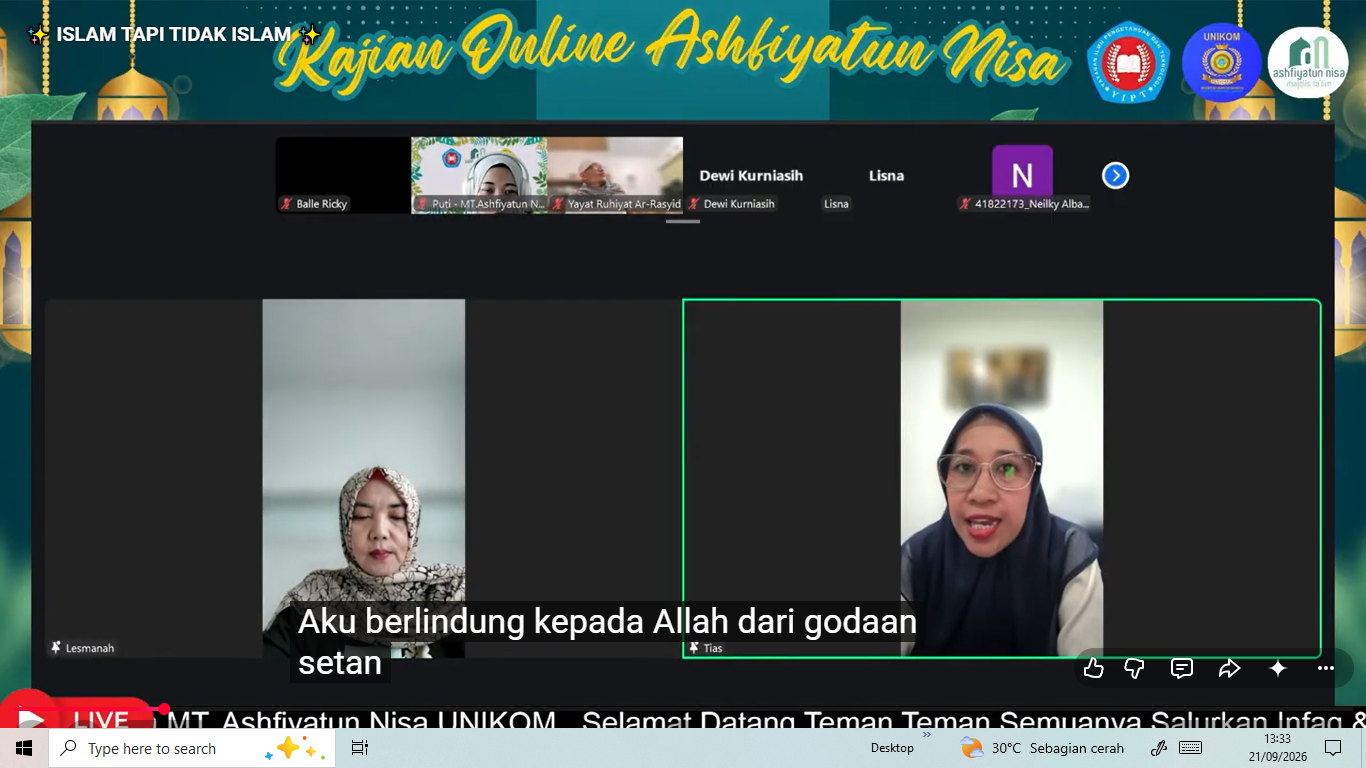
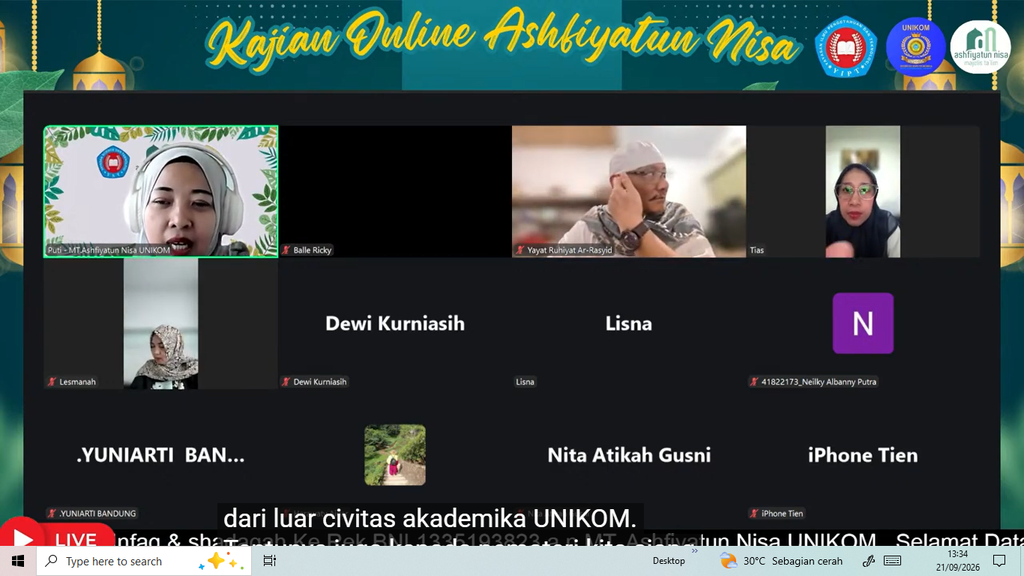
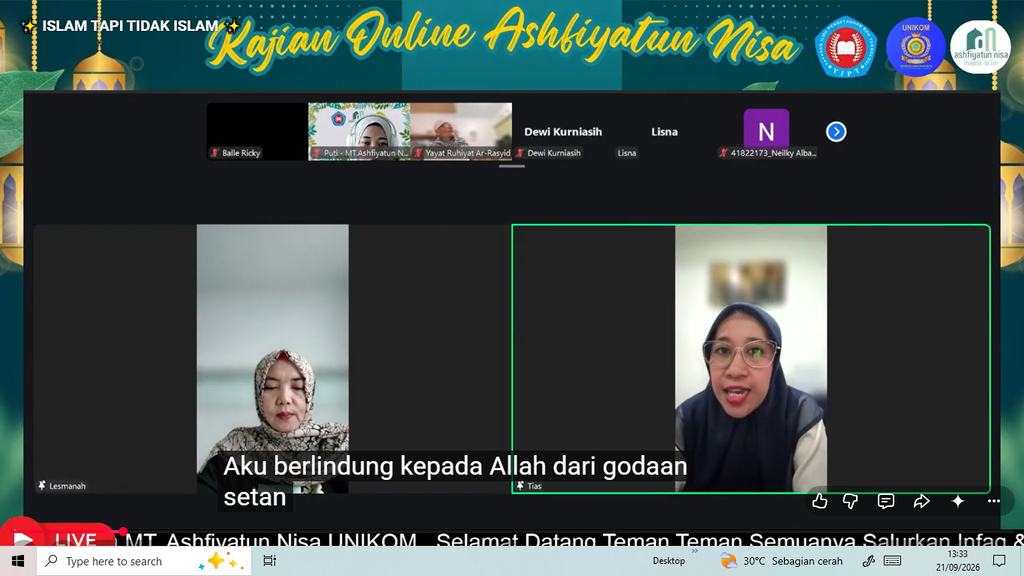
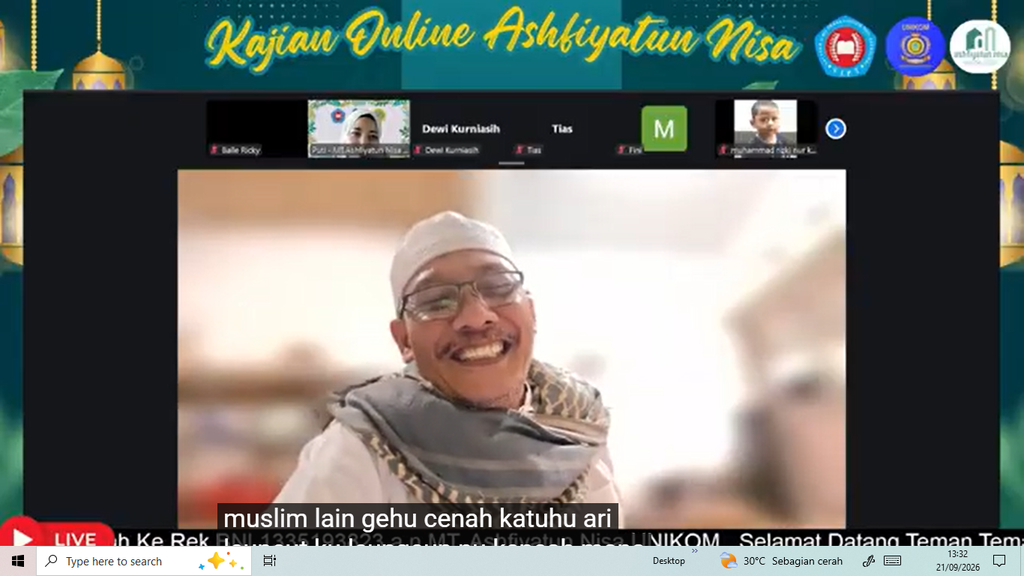
    BANDUNG, UNIKOM — Islamic values are reflected not only through the performance of religious rituals but also through everyday behavior that upholds honesty, trustworthiness, justice, cleanliness, punctuality, empathy, and tolerance. This message was a central topic of discussion during an online Islamic study session organized by the Majelis Ta’lim (MT) Ashfiyatun Nisa Islamic of Universitas Komputer Indonesia (UNIKOM), featuring Ustadz Yayat Ruhiyat as the guest speaker on Friday, September 18, 2026.

    The session, themed “Islam but Not Islamic,” was attended by members of the Majelis Ta’lim (MT) Ashfiyatun Nisa and the UNIKOM academic community. Furthermore, the event served as a platform for spiritual strengthening and reflection for the academic community, particularly the members, fostering an understanding of how Islamic teachings can be tangibly manifested in daily life.

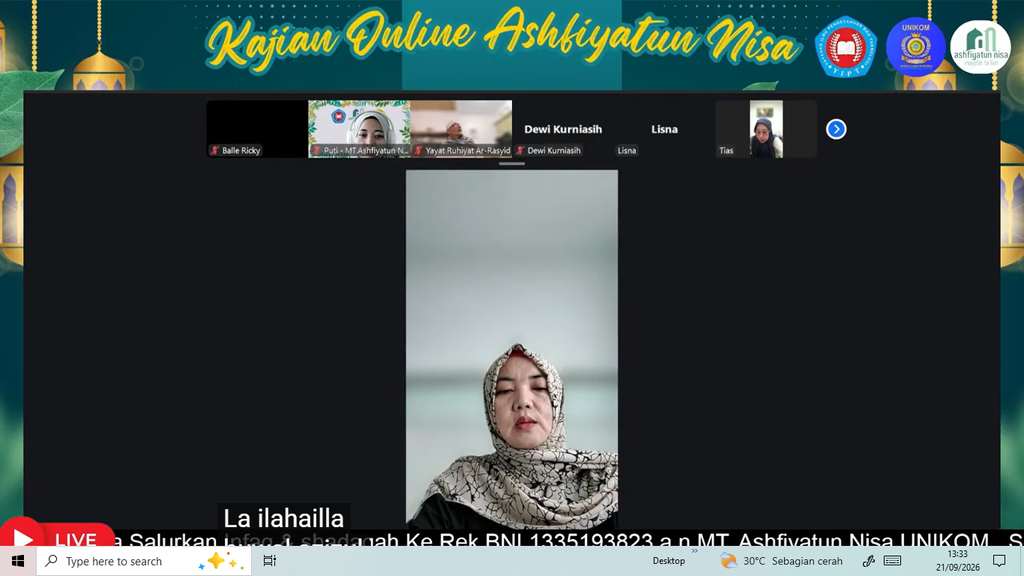
    The event commenced with the recitation of the Holy Qur’an by Qariah Ms. Lasmanah, accompanied by Ms. Tyas reading the translation. The recited verses were Surah Ali ‘Imran, verses 18–19, which state: “Allah bears witness that there is no deity but Him, and so do the angels and those of knowledge, that He is maintaining creation in justice. There is no deity except Him, the Exalted in Might, the Wise (18). Indeed, the religion in the sight of Allah is Islam. And those who were given the Scripture did not differ except after knowledge had come to them, out of jealous animosity between themselves. And whoever disbelieves in the verses of Allah, then indeed, Allah is swift in account (19).”

    Following the Qur’an recitation, the event proceeded with the core lecture, guided by the Head of the Majelis Ta’lim (MT) Ashfiyatun Nisa UNIKOM, Apriani Puti Purfini, S.Kom., M.T., serving as the moderator. In his presentation, Ustadz Yayat Ruhiyat invited participants to reflect on the distinction between “Islam” as a religious identity and being “Islamic” as a set of values manifested through behavior.

    According to him, a person may be a Muslim, but Islamic values might not be fully reflected in their behavior. He then cited the dialogue between French philosopher Ernest Renan and Muhammad Abduh, a prominent Egyptian scholar, to illustrate the challenge of proving Islamic values in real life. “There are people who are Muslim, but not necessarily Islamic in practice,” Ustadz Yayat noted during his lecture.

    Ustadz Yayat explained that the greatness of Islamic teachings cannot be seen solely through symbolic or ritualistic aspects. Various forms of worship, such as prayer, reciting the Qur’an, attending study groups, Umrah, and Hajj, are vital components of a Muslim’s life. However, he argued that these values must also be translated into social behavior and everyday life.

    Ustadz Yayat subsequently discussed a study, frequently associated with George Washington University, concerning the “Islamicity” index of nations based on social value indicators. In the session, he presented seven indicators used as benchmarks: honesty, trustworthiness, justice, cleanliness, punctuality, empathy, and tolerance. “Thus, there are seven items that serve as a barometer to determine whether an individual, a community, a household, or a country reflects Islamic values,” he explained.

    This discussion guided the participants to the understanding that religiosity should not end at ritual activities; rather, it must foster character and actions that benefit others. The values of honesty, trustworthiness, fairness, maintaining cleanliness, respecting time, caring for fellow human beings, and respecting differences are integral to implementing Islamic values in social life.

    In the final session, Ustadz Yayat emphasized the importance of initiating change from within oneself. According to him, one does not need to wait for others to perform good deeds first. The implementation of Islamic values can ideally begin in one’s immediate environment and through personal actions. “Beginning with ourselves. We start from ourselves, from within. Never expect to wait for others to act while we are unwilling to do so,” he asserted.

    Through this study session, the Majelis Ta’lim (MT) Ashfiyatun Nisa UNIKOM S not only provided a space to deepen religious understanding but also encouraged reflection on how Islamic teachings can be present in daily character, ethics, and behavior. It is hoped that this message will serve as a reminder for all participants to manifest the values of goodness starting from themselves, their families, and their work environments, extending out to broader society. (Directorate of Hms & Pro)

  • UNIKOM 2026 Impact-Oriented KKN Students Participate in Second Technical Training: Strengthening the Implementation of Digital Systems in the Community

    UNIKOM 2026 Impact-Oriented KKN Students Participate in Second Technical Training: Strengthening the Implementation of Digital Systems in the Community

    BANDUNG, UNIKOM — As they enter the program’s implementation phase across various service areas in Coblong Subdistrict, Bandung City, student participants in the 2026 Impact-Driven Community Service Program (KKN) at the Universitas Komputer Indonesia (UNIKOM) attended the second technical training session held on Wednesday, September 9, 2026. Held in the 4th-floor auditorium of UNIKOM Campus I, the event was part of an effort to strengthen the students’ readiness to implement various digital systems that will be utilized by the community and field staff.

    The Bimtek was attended by students participating in the 2026 UNIKOM Impact-Oriented KKN, who have now been assigned to their respective service areas and have begun carrying out their work programs alongside the community. The session was led by the Deputy Executive Chair of the UNIKOM 2026 Impact-Driven Community Service Program, Dr. Agus Mulyana, S.Kom., M.T., who provided training on the implementation of information systems that support the execution of community service programs.

    According to Dr. Agus, this second training session is a continuation of the previous one. While the first training session focused on operating the system to support student activities during the KKN, the second session was geared toward developing students’ ability to introduce and implement the system that will be used by the community. “Today, we are holding the second training session for our students on how to implement the application we have prepared for the community as well as for field staff,” said Dr. Agus.

    Previously, the students had received training on using the system that supports all stages of the KKN program, from planning, implementation, monitoring, and assessment to evaluation. The system also enables various student activities to be digitally documented and integrated.

    Through the use of technology, the students’ presence at their service locations can be monitored more effectively, including participant data collection, geofencing-based placement, and the recording of daily activities, permits, and various other field conditions.

    A similar sentiment was expressed by the Head of the Guidance, Counseling, Graduate Careers, and Alumni Division (BKKLA), Dr. Nungki Heriyati, S.S., M.A., who serves as a member of UNIKOM’s Impactful KKN Task Force and as a Field Supervisor (DPL). According to her, all student groups have developed work plans in collaboration with their DPLs and have begun carrying out various activities in their respective areas. “The students have been assigned to their respective positions and have begun implementing the work plans that were developed. Each group has submitted its work plan to the DPL, received approval, and has also entered the information into the system,” explained Dr. Nungki.

    Dr. Nungki added that the digital system used in UNIKOM’s 2026 Impact-Driven Community Service Program (KKN Berdampak) enables a more structured monitoring process. Data on student activities recorded in the system can help the implementation team and Field Supervisors track the program’s progress on a regular basis.

    By the seventh and eighth weeks of implementation, 32 student groups had been deployed to various regions and had begun adapting to their environments, identifying community needs, and carrying out the university’s work programs, proposed work programs, and ad hoc programs according to on-the-ground conditions.

    Through the phased implementation of technical training workshops, UNIKOM continues to foster the development of a Community Service Program (KKN) model that adapts to technological advancements. The use of digital systems is expected not only to support the program’s effectiveness but also to strengthen the measurement of community service impact in a more quantifiable and sustainable manner. (Directorate of Hms & Pro)

  • Targeting National and International Grants, the Center for Digital Business Studies, Faculty of Economics and Business of UNIKOM, Strengthens Lecturers’ Competencies Through a Research Grant Proposal Writing Workshop

    Targeting National and International Grants, the Center for Digital Business Studies, Faculty of Economics and Business of UNIKOM, Strengthens Lecturers’ Competencies Through a Research Grant Proposal Writing Workshop

    BANDUNG, UNIKOM — To strengthen the capacity of lecturers in producing high-quality research and increase their opportunities to secure research funding, the Center for Digital Business Studies, under the auspices of the Faculty of Economics and Business of Universitas Komputer Indonesia (UNIKOM), organized a National and International Research Grant Proposal Writing Workshop on Tuesday, September 8, 2026. Held in VVIP Room 16, 16th Floor of the UNIKOM Smart Building, the event was specifically aimed at lecturers within the Faculty of Economics and Business of UNIKOM. It sought to equip participants with the strategies and skills necessary to draft competitive grant proposals for both national and international funding schemes. Furthermore, the workshop was designed to foster the formation of research groups capable of generating impactful proposals, publications, and research outputs.

    The event was attended by UNIKOM’s executive leadership, including the Vice Rector I for Academic and Student Affairs, Prof. Dr. Hj. Umi Narimawati, Dra., S.E., M.Si.; the Vice Rector for Technology & ICT, International Programs & Center of Excellence, Prof. Zainal A. Hasibuan, MLS., Ph.D.; the Dean of the Faculty of Economics and Business of UNIKOM, Prof. Dr. Siti Kurnia Rahayu, S.E., M.Ak., Ak., CA.; the Head of the Center for Digital Business Studies and Director of UNIKOM International Programs, Dr. Senny Lukyardi, S.P., M.M.; the Director of DP3M UNIKOM, Assoc. Prof. Dr. Irawan Afrianto, S.T., M.T.; the Director of the UNIKOM Center for International Studies and Grants, Dr. Muhammad Aria Rajasa Pohan, M.T.; as well as an external multi-grant expert speaker, Dr. Adi Santoso, S.E., M.M., representing the COE Economics of Advanced Digital Technology (EADT) of Telkom University. Heads of Study Programs and lecturers from the Faculty of Economics and Business of UNIKOM were also in attendance.

    In his opening remarks, the Vice Rector for Technology & ICT, International Programs & Center of Excellence, Prof. Zainal A. Hasibuan, MLS., Ph.D., stated that the workshop is part of ongoing efforts to develop the Center of Excellence, particularly in strengthening the research sector. “On this occasion, we are holding a workshop on writing national and international grant proposals. This is a highly strategic endeavor and a long journey, but we must begin by making preparations to welcome various competitive grant invitations,” expressed Prof. Zainal.

    He noted that the initiative, spearheaded by the Faculty of Economics and Business of UNIKOM, is expected to serve as an initial step that can subsequently be expanded and adopted by other faculties within UNIKOM. The presence of both internal and external speakers is anticipated to provide valuable experience, guidance, and mentorship to lecturers in producing high-quality and competitive proposals. Prof. Zainal added that strengthening research is also part of UNIKOM’s contribution to supporting government programs, particularly through the development of higher education institutions that deliver tangible impacts.

    Meanwhile, the Vice Rector for Academic and Student Affairs, Prof. Dr. Hj. Umi Narimawati, Dra., S.E., M.Si., expressed her appreciation for the execution of the workshop, which specifically involved the Faculty of Economics and Business of UNIKOM lecturers. She stated that the event aligns with UNIKOM’s efforts to build and strengthen research groups. “Research requires thought, not just individual thought, but the collective thinking of many people to generate excellent ideas. With high-quality data and appropriate methods, it will certainly produce impactful research,” said Prof. Umi.

    Furthermore, Prof. Umi encouraged lecturers to cultivate a collaborative research culture. According to her, collaboration is a crucial element in producing high-quality academic work while simultaneously supporting the academic career development of lecturers. “No single work is solely accomplished alone. Therefore, it is highly appropriate that UNIKOM, particularly the Faculty of Economics and Business, dissects these research activities together,” she added.

    Prof. Umi also highlighted the Center for Digital Business Studies as a significant potential asset to be developed by the Faculty of Economics and Business of UNIKOM. She noted that the study center possesses unique characteristics as it is supported by the utilization of Artificial Intelligence (AI) technology. She hopes that the outcomes of research and community service will not stop at academic outputs but can be implemented and developed into various innovations and entrepreneurial activities. This aligns with UNIKOM’s direction to foster the emergence of exceptional AI-based entrepreneurs.

    On the same occasion, the Dean of the Faculty of Economics and Business of UNIKOM, Prof. Dr. Siti Kurnia Rahayu, S.E., M.Ak., Ak., CA., explained that the workshop is part of the faculty’s efforts to implement UNIKOM’s vision, mission, and objectives, particularly in supporting the strengthening of the Center of Excellence and the development of a research culture within the faculty. According to her, the Faculty of Economics and Business of UNIKOM has established a study center which, despite being relatively new, is supported by teaching staff with immense potential for development. The workshop was specifically directed to provide facilitation and mentorship for lecturers, especially those who lack experience as principal investigators in research grant applications.

    Prof. Siti also explained that one of the primary targets to be achieved through this event is the production of research proposals that meet the requirements and qualifications as directed by the speakers. Currently, the Faculty of Economics and Business of UNIKOM has formed 15 research groups that are undergoing the proposal development process, and this number is expected to grow. “Regarding the output, our hope is to generate proposals that genuinely fulfill the requirements and qualifications outlined by the speakers. We already have 15 groups, and God willing, this will increase. From these 15 groups, the target is at least one proposal from each group, and if there is more than one, it will certainly be an even better achievement,” she elaborated.

    Not stopping at the workshop’s execution, the Faculty of Economics and Business of UNIKOM of UNIKOM has also prepared a follow-up phase through a monitoring and evaluation process. This monitoring will be conducted in collaboration with the Faculty of Economics and Business of UNIKOM Study Center to ensure that the materials and workshop outcomes translate into proposals ready for submission to various grant schemes. “The next step after this activity is monitoring. The Head of the Study Center, Mrs. Senny, will observe the extent of the follow-up from this workshop, as we are pushing to have proposals ready for submission to government-related systems this year, both nationally and internationally,” concluded Prof. Siti.

    The workshop series then continued with the main sessions featuring several expert speakers. The Director of the UNIKOM Center for International Studies and Grants, Dr. Muhammad Aria Rajasa Pohan, M.T., delivered a presentation on navigating international grants and consortiums. Subsequently, the Director of DP3M UNIKOM, Assoc. Prof. Dr. Irawan Afrianto, S.T., M.T., discussed national research policies and internal institutional strengthening.

    Meanwhile, the external multi-grant expert speaker, Dr. Adi Santoso, S.E., M.M., presented material on the anatomical breakdown of proposals and the formulation of novelty. The session proceeded with a hands-on workshop and a draft clinic, allowing lecturers not only to gain a conceptual understanding but also to directly develop their proposal drafts.

    The event was further complemented by a panel discussion and a live review of proposal drafts, analyzing several proposal ideas from representatives of the Faculty of Economics and Business of UNIKOM lecturers. During this session, participants received direct feedback from the speakers to refine their ideas and the substance of their proposals before advancing to the grant submission stage.

    Through this grant workshop specifically targeted at the Faculty of Economics and Business of UNIKOM lecturers, it is hoped that an increasingly collaborative and productive research ecosystem will be established, simultaneously generating highly competitive research proposals at the national and international levels. These efforts are part of the Faculty of Economics and Business of UNIKOM’s pivotal steps in strengthening research contributions, enhancing lecturer capacity, and producing academic work that holds broader relevance and impact. (Directorate of Hms & Pro)

  • PMB UNIKOM 2026 is Still Open! Know the Admission Process, from Registration to Re-Registration, and Seize the Opportunity to Study at a Digital and AI-Ready Campus

    PMB UNIKOM 2026 is Still Open! Know the Admission Process, from Registration to Re-Registration, and Seize the Opportunity to Study at a Digital and AI-Ready Campus

    BANDUNG, UNIKOM — The opportunity to join Universitas Komputer Indonesia (UNIKOM) family for the 2026/2027 academic year is still open. As the 2026 UNIKOM New Student Admissions (PMB) period draws to a close, prospective students need to ensure that every stage, from registration and selection to re-registration, has been completed according to the established schedule.

    In an interview, the Director of UNIKOM’s  PMB 2026, Dr. Yudistira Soegoto, S.Kom., M.Kom., explained that the new student admission process begins with registration. Prospective students can register in person at the UNIKOM campus or online through pmb.unikom.ac.id.

    After registering, prospective students select their study program and admission pathway. UNIKOM currently opens approximately 32 study programs at various levels, from Diploma to Doctoral programs. Admission pathways are generally divided into two categories: test-based and non-test-based pathways, with additional document requirements for the latter.

    “For those who don’t take the test, such as applicants through the report card and achievement pathways, prospective students are required to fulfill requirements such as a recommendation letter from the principal, achievement certificates, and report card grades. Meanwhile, for the test pathway, prospective students are required to take the online selection process at usm.unikom.ac.id,” explained Dr. Yudistira.

    Interestingly, for applicants who take the test-based pathway, the selection results are available on the same day after the test is completed. Prospective students who pass can then proceed to the registration process.

    Re-Registration: A Critical Step Before Officially Becoming a UNIKOM Student

    The re-registration process can be completed online through the PMB system by completing and uploading several required administrative documents, such as graduation certificates and other supporting documents. Prospective students who require assistance can also complete the re-registration process in person at UNIKOM and receive assistance from the PMB team with document uploads.

    Once all documents have been declared valid, prospective students will receive a yellow receipt as proof of registration completion. This receipt will then be used to collect various student items, including Student Identification Cards, alma mater jackets, and health cards.

    The next step is for prospective new students to join information groups, both general and study program group. These groups serve as a platform of coordination and information leading up to the new student admission process.

    Registration Remains Open Until September 19, Re-Registration Until September 20, 2026

    For prospective students who have not yet completed the registration process, the opportunity to join UNIKOM is still open. Dr. Yudistira emphasized that registration for UNIKOM’s 2026 PMB remains open until Saturday, September 19, 2026. The re-registration deadline is Sunday, September 20, 2026, one day before the new student admission process begins on September 21, 2026.

    To ensure that prospective students continue to receive services until the deadline, the UNIKOM PMB team will continue providing services over the weekend. On Saturday, September 19, 2026, services will be available until 4:00 PM WIB, while on Sunday, September 20, 2026, services will remain open until 3:00 PM WIB. “The Admissions Team will continue to carry out its duties on weekends, Saturday and Sunday. Therefore, prospective students who still wish to register will still be able to do so until those dates,” said Dr. Yudistira.

    After completing all these processes, prospective new students will participate in UNIKOM’s new student admission activities, scheduled from Monday, September 21, 2026, through UNIKOM’s PKKMB on September 23, 2026.

    UNIKOM’s 2026 New Student Admissions Opened Early with Five Batches

    Unlike the previous two years, when admissions generally began in January, UNIKOM’s 2026 New Student Admissions opened earlier. Registration began in December 2025 and was divided into five batches. The first batch ran from December 2025 to January 2026, followed by the second batch in February–March, the third batch in April–May, the fourth batch in June–July, and the fifth batch in August–September 2026.

    This provides prospective students with more opportunities to prepare their study program choices, determine their admission pathway, participate in the selection process for the test-based pathway, and complete the registration process.

    UNIKOM Equips Students with Digital and Entrepreneurial Competencies

    Furthermore, Dr. Yudistira explained that choosing a university is not simply about whether it is public or private, but also about how the university can provide relevant knowledge and skills for future needs. As a university that has achieved Excellence Accreditation, UNIKOM offers learning that focuses not only on academic competencies but also on technological mastery and student adaptability.

    One of the advantages offered is the provision of compulsory courses related to software, hardware, animation, and entrepreneurship. He believes that this training is crucial because not all university graduates ultimately work in fields directly related to their study programs. “If equipped with these courses, UNIKOM graduates can certainly excel because they have the advantages they already have, such as hardware, software, animation, and entrepreneurship,” he explained.

    In addition to its curriculum, UNIKOM also continues to strengthen its technology-based learning ecosystem by developing various supporting facilities. These include smart classrooms that support hybrid learning and the AI Learning Center Lab, a collaboration between UNIKOM and Google that is among the pioneering AI learning centers in Indonesia.

    This strengthening of the digital ecosystem is also supported by the use of Google for Education, which provides access to various digital tools and services to support learning, collaboration, and competency development for students and academics. UNIKOM also has a strategic campus environment in the heart of Bandung, equipped with sports facilities, a medical clinic, a library, and various other supporting facilities.

    Don’t Hesitate to Choose a University, Get to Know the Campus and Experience the Atmosphere

    For prospective students who are still deciding where to study, Dr. Yudistira advised that their decision should not be based solely on whether a university is public or private. He encouraged prospective students to consider their needs, interests, and desired educational and career goals. He also encouraged prospective students to get to know UNIKOM firsthand before making a decision. “For those of you who are still considered, try experiencing the vibe and atmosphere of UNIKOM. See the facilities, visit UNIKOM first, and then decide whether you should attend UNIKOM or not,” he said.

    He added that a person’s success is not solely determined by the status of a university. More importantly, students should make the most of learning opportunities, develop their competencies, and take an active role in responding to changing times.

    UNIKOM’s Generation Must Be Technology Pioneers and Job Creators

    Looking toward the future generation of UNIKOM students, Dr. Yudistira hopes that students will not only be users of technology but will also be able to play a role in technological development. “Don’t be left behind by technology. As time progresses, technology naturally becomes more sophisticated. We shouldn’t just be consumers, but rather leaders who can play a role in technological development,” he emphasized.

    According to him, UNIKOM students’ track record of achievements at the national and international levels is crucial to continuing to produce an excellent generation. UNIKOM’s various achievements in global competitions demonstrate that students at private universities also have significant opportunities to excel and compete globally. Beyond simply becoming graduates who are ready to enter the workforce, Dr. Yudistira hopes that UNIKOM students will be able to create opportunities and jobs. “Not just be workers. If possible, create jobs, because recognizing opportunities is important. If you can create jobs, don’t just be workers,” he concluded.With the closing dates for registration and the implementation of UNIKOM’s 2026 New Student Admissions approaching, prospective students are expected to immediately confirm their study program choices, admission pathways, required documents, and registration status. Registration remains open until September 19, 2026, while re-registration can be completed until September 20, 2026, before prospective students participate in the new student admission series beginning on September 21, 2026. Let’s be part of the Digital Entrepreneurial Campus. (Directorate of Hms & Pro)

  • Benchmarking Between FTIK UNIKOM and FMIPA ULM South Kalimantan: Discussing Information Systems Study Program Development and Collaboration in the Digital Era

    Benchmarking Between FTIK UNIKOM and FMIPA ULM South Kalimantan: Discussing Information Systems Study Program Development and Collaboration in the Digital Era

    BANDUNG, UNIKOM — Sharing experiences and strengthening academic networks are crucial to the development of higher education in the era of digital transformation. This was reflected in a benchmarking by the Faculty of Mathematics and Natural Sciences (FMIPA) of Universitas Lambung Mangkurat (ULM), South Kalimantan, to the Faculty of Engineering and Computer Science (FTIK) of Universitas Komputer Indonesia (UNIKOM) on Thursday, September 3, 2026. Held in the FTIK Meeting Room on the 7th floor of the UNIKOM Smart Building, the event specifically discussed plans to establish and develop the Undergraduate Information Systems Study Program at ULM, while also exploring opportunities for collaboration between UNIKOM and ULM.

    Also in attendance were members of the FMIPA ULM delegation, including Prof. Sunardi, S.Si., M.Sc., Ph.D. (Dean of FMIPA ULM), Irwan Budiman, S.T., M.Kom. (Head of UPA TIK ULM ), Dwi Kartini, S.Kom., M.Kom. (Head of the Computer Science Department of FMIPA ULM ), Fatma Indriani, S.T., M.I.T., Ph.D. (Secretary of the Computer Science Department of FMIPA ULM), and Dodon T. Nugrahadi, S.Kom., M.Eng. (Lecturer in the Computer Science Department of FMIPA ULM). Meanwhile, representatives from FTIK UNIKOM included Assoc. Prof. Dr. Ir. Herman Soegoto, MBA. (Vice Rector III for Research, Innovation, and Accreditation and Dean of FTIK UNIKOM), Assoc. Prof. Dr. Wartika, S.Kom., M.T. (Head of the Information Systems Study Program), Rangga Sidik, S.Kom., M.Kom., Bella Hardiyana, S.Kom., M.Kom., Ph.D. (Head of the Informatics Management and Digital Business Study Program ), and Dr. Henike Primawanti, M.I.Pol. (Head of the Cooperation Division).

    Assoc. Prof. Dr. Ir. Herman Soegoto, MBA., expressed his appreciation for the visit by FMIPA ULM to UNIKOM. “We are pleased that UNIKOM is one of the universities visited by ULM. On this occasion, we can discuss and share our knowledge, as well as the experiences shared by our colleagues from ULM,” he said. He also explained that one of the main focuses of the visit was ULM’s plan to establish an Undergraduate Information Systems Study Program.

    The Dean of FMIPA ULM, Prof. Sunardi, S.Si., M.Sc., Ph.D., explained that the visit to UNIKOM was part of ULM’s efforts to initiate collaboration in various fields, including academics and research and human resource development. “Our main goal in visiting UNIKOM was to initiate collaboration in academics, research, and human resource development. We also discussed extensively the development of study programs, particularly the Undergraduate Information Systems Program,” he said.

    Prof. Sunardi noted that UNIKOM has relevant experience that can serve as a reference for developing the Undergraduate Information Systems Program at ULM. Therefore, the visit was also intended to provide an opportunity to learn about UNIKOM’s efforts in developing its Information Systems Study Program. “We see that UNIKOM has a very advanced Information Systems Study Program. In this regard, we want to learn how to develop the Information Systems Study Program at ULM,” he explained.

    Furthermore, Prof. Sunardi highlighted UNIKOM’s relevant experience and position in the fields of engineering and computer science. “We see UNIKOM as one of the leading private universities in engineering and computer science. That’s one of the main reasons we came here to learn and conduct benchmarking,” said Prof. Sunardi.

    Several collaborative plans were also discussed between ULM and UNIKOM. One of these involved encouraging ULM lecturers to pursue doctoral studies, particularly in Information Systems. “First, we will encourage our lecturers to pursue doctoral studies, particularly in Information Systems. Furthermore, we hope to collaborate academically through lecturer exchanges or guest lecturers, as well as through research collaboration,” he explained.

    The event continued with an interactive discussion, which not only provided a forum for exchanging information on the development of the Information Systems Study Program but also opened discussions on potential academic and research collaborations. Lecturer exchanges, guest lectures, joint research, and opportunities for further study for ULM lecturers were among the collaborative opportunities that could be further developed by both institutions.

    The visit concluded with a documentation session and souvenir exchange between FTIK UNIKOM and FMIPA ULM as symbols of appreciation and the strong relationship between the two institutions.

    According to Assoc. Prof. Dr. Herman, during the discussion, ULM explored information about the development of the Information Systems Study Program at UNIKOM, from its establishment process to aspects that differentiate it from other study programs, such as Informatics, Informatics Engineering, and Computer Engineering. Furthermore, ULM explored the characteristics and distinctive features of the Information Systems Study Program at UNIKOM.

    In addition to discussing aspects of study program development, the discussion also focused on potential future collaboration opportunities between the two universities. One of the opportunities identified was human resource development through further study for ULM lecturers. “In the future, there is a possibility that lecturers from ULM can pursue doctoral studies in Information Systems at UNIKOM. This can certainly be part of the effort to strengthen the Information Systems Study Program planned to be established by ULM,” added Assoc. Prof. Dr. Herman.

    At the end of the discussion, he expressed his hope for continued collaboration. “Hopefully, today’s discussion can foster broader collaboration in the future. I think this is very good for the development of education in Indonesia,” he concluded.

    The activity concluded with a visit by the ULM delegation to the UNIKOM x Google AI Learning Center Lab, located in the lobby of the UNIKOM Smart Building. The visit served as an introduction to UNIKOM’s artificial intelligence-based learning and technology development facilities, while also complementing the benchmarking and knowledge-sharing activities conducted during the event.

    Through ULM’s visit to UNIKOM, the two institutions demonstrated their commitment to building institutional relationships that go beyond benchmarking activities and can develop into sustainable collaboration. Knowledge exchange, human resource development, academic collaboration, and research are among the potential areas of collaboration that can be jointly developed to support the improvement of the quality of higher education in Indonesia. (Directorate of Hms & Pro)
  • From A Rigorous Selection to Dream Campus; Selected UNIKOM Kartu Indonesia Pintar Scholars are Ready to Begin a New Chapter

    From A Rigorous Selection to Dream Campus; Selected UNIKOM Kartu Indonesia Pintar Scholars are Ready to Begin a New Chapter

    BANDUNG, UNIKOM — The long journey of selecting new students for Universitas Komputer Indonesia (UNIKOM) through the Kartu Indonesia Pintar Kuliah (KIP Kuliah) scholarship program has reached its final stage. On Friday, August 28, 2026, UNIKOM’s Scholarship Division conducted a re-registration event for the new KIP Kuliah scholarship recipients at the Lobby of UNIKOM Campus I. The event was attended by the students’ parents and guardians, and featured a photo session as well as the distribution of alma mater jackets as part of UNIKOM’s new student welcoming series.

    This event marked a significant milestone for the new KIP Kuliah scholars as they begin their academic journey at UNIKOM. In addition to completing the administrative and documentation processes, the students received their university jackets as an official symbol of their integration into the extended UNIKOM family.

    The Head of UNIKOM‘s Scholarship Division, Dr. Lina Ismawati, S.E., M.Si., stated that the event is part of the final phase of an extensive selection process for the new KIP Kuliah recipients. According to her, the scholarship program is a mandate that must be carried out with full responsibility by both UNIKOM and the participating students.

    “Alhamdulillah (Thank God), the long journey of selecting new KIP Kuliah students at Universitas Komputer Indonesia has reached its final point. Today, we are conducting the re-registration for the new KIP Kuliah students who are receiving state funding,” she stated.

    Dr. Lina explained that KIP Kuliah recipients receive educational financial support in accordance with the program’s provisions, which includes Single Tuition Fee (UKT) coverage as well as living expenses or an operational allowance. Alongside the government’s support, UNIKOM also provides subsidies as a demonstration of its commitment to supporting the educational continuity of the KIP Kuliah scholars.

    “The scholarship fully covers the UKT and other fees, and includes an operational allowance for the students amounting to seven million five hundred thousand rupiahs. Certainly, there is also support from UNIKOM in the form of subsidies for the students so that everything is free of charge,” she explained.

    The selection process for KIP Kuliah recipients at UNIKOM is conducted rigorously through a series of stages. This year, 905 applicants from across the archipelago participated in the selection process to secure the opportunity to pursue higher education through the KIP Kuliah track at UNIKOM.

    According to Dr. Lina, the high number of applicants is an indicator of public trust in UNIKOM as a higher education institution that provides educational opportunities for high-achieving students from economically disadvantaged backgrounds. “Alhamdulillah, this is proof that UNIKOM is trusted as an excellent campus by students who aspire to study here,” she expressed.

    Furthermore, she emphasized that the opportunity to receive the KIP Kuliah must be matched by the students’ earnestness in fulfilling their obligations during their studies. The scholarship recipients are expected to maintain their academic achievements, complete their studies on time, and make positive contributions while studying at UNIKOM. “This scholarship is a mandate from the people. Therefore, all KIP Kuliah students must fulfill their duties as students and demonstrate their best achievements, so that they can graduate on time, bring home their diplomas, and welcome a much brighter future,” she concluded.

    One of the new KIP Kuliah recipients, Muhammad Sulthon Abul Mafakhir, a student of the Informatics Engineering Study Program at UNIKOM, expressed his gratitude for the opportunity to pursue higher education through the program. He mentioned that the process of obtaining the KIP Kuliah was quite lengthy. After taking a gap year, he applied through the KIP Kuliah portal and eventually earned the chance to take the Computer-Based Test (CBT) at UNIKOM, followed by subsequent selection stages.

    “The process was quite long because I took a gap year first. Then, I tried applying through the KIP Kuliah portal. It turned out I received a call for a CBT test at UNIKOM. Alhamdulillah, I was also called for a Zoom Meeting,” he revealed.

    His interest in choosing UNIKOM and the Informatics Engineering Study Program has been growing since his school days. He admitted to having a passion for computers since junior high school, which led him to choose Informatics Engineering as his desired field of study. “I had been interested in coming here and studying Informatics Engineering for a while, because I have been interested in computer studies since junior high school,” he said.

    This happiness was also shared by Muhammad Sulthon’s mother, Yusi Anggrain, who accompanied her son during the re-registration and jacket distribution event. She expressed immense gratitude at seeing her son get the opportunity to pursue higher education through the KIP Kuliah track. “Alhamdulillah, as his parent, I am highly grateful to have a high-achieving child through the KIP track,” she stated.

    As a parent, Yusi hopes that the opportunity her son has received can be utilized as best as possible to achieve success during his studies at UNIKOM. She also hopes that her son will be able to complete his education well and graduate on time. “My hope is that he can become the best and highest-achieving student. Hopefully, he can study well and, Insha’Allah, graduate on time,” she hoped. For Yusi, her first visit to the UNIKOM campus was also a joyous experience. She admitted to being impressed by the campus environment and appearance she witnessed firsthand. The momentum of the re-registration, photo session, and the distribution of the university jackets marked a new beginning for the KIP Kuliah recipients to embark on their academic journey at UNIKOM. Through its Scholarship Division, UNIKOM remains committed to ensuring that KIP Kuliah students receive the necessary support throughout their education, while simultaneously instilling the value of responsibility, that the scholarship opportunity must be realized through achievements, discipline, and the successful completion of their studies. (Directorate of Hms & Pro)
  • Management Study Program of FEB UNIKOM Achieves Excellent Accreditation, Ready to Strengthen Innovation and Graduates’ Competitiveness

    Management Study Program of FEB UNIKOM Achieves Excellent Accreditation, Ready to Strengthen Innovation and Graduates’ Competitiveness


    BANDUNG, UNIKOM — The Bachelor of Management Study Program at the Faculty of Economics and Business (FEB) of Universitas Komputer Indonesia (UNIKOM) has successfully achieved Excellent accreditation from Perkumpulan Lembaga Akreditasi Mandiri Ekonomi Manajemen Bisnis dan Akuntansi (LAMEMBA), the Independent Accreditation Agency for Economics, Management, Business, and Accounting. This achievement was established through LAMEMBA Decree Number 272/DE/A.5/LAMEMBA-U/IX/2026. According to the accreditation certificate, the Bachelor of Management Study Program at Universitas Komputer Indonesia, Bandung, has been awarded Excellent accreditation, valid from September 4, 2026, to September 4, 2031.

    Achieving Excellent accreditation is a significant accomplishment for FEB UNIKOM in strengthening the quality of higher education, particularly within the Bachelor of Management Study Program. Previously, the Management Study Program had received an A accreditation rating from the National Accreditation Board for Higher Education (BAN-PT). Therefore, achieving Excellent accreditation from LAMEMBA demonstrates the study program’s commitment and consistency in maintaining and improving the quality of education. This achievement also recognizes the various quality improvement processes that have been consistently implemented over the past several years.

    The Dean of FEB UNIKOM, Prof. Dr. Siti Kurnia Rahayu, S.E., M.Ak., Ak., CA., expressed her gratitude for this achievement. According to her, the successful accreditation was not the result of preparations made only shortly before the assessment process, but rather the outcome of a long-term process that had been underway for the previous five years.

     “Alhamdulillah, it was an extraordinary process. Accreditation is not a process that ends in a particular year, after which we simply prepare the documents required for the assessment. Rather, it is a process that has been ongoing for the past five years,” said Prof. Siti.

    Prof. Siti viewed this achievement as evidence that the hard work and consistency of all elements within the faculty and study program can produce the expected results. “The Excellent accreditation proves, firstly, that hard work will produce the results we hope for. However, the greatness of Allah is also important because, without Allah’s love, we would not have achieved such extraordinary results,” she said.

    Consistency in Quality Improvement

    Furthermore, Prof. Siti emphasized that Excellent accreditation is not the end of FEB UNIKOM’s journey toward improving the quality of education. Instead, this achievement must be consistently maintained and further enhanced throughout the next five years by the Management Study Program.

    According to her, the Management Study Program must continue implementing the learning process and the Tridharma of Higher Education, supported by sound governance in accordance with the provisions and standards established by LAMEMBA.

    “Our hope going forward is that this will be our starting point at the Faculty of Economics, particularly in the Management Study Program, to continue implementing the learning process and the Tridharma of Higher Education, as well as strengthening governance over the next five years,” she explained.

    She further emphasized the importance of maintaining continuity after obtaining Excellent accreditation. The accreditation should not cause the academic community to stop pursuing improvements.

    “It cannot stop. After we receive Excellent accreditation, it does not mean that the process is over. We must continue implementing processes that comply with LAMEMBA’s requirements in this context,” Prof. Siti stated.

    The Challenge of Maintaining Excellent Accreditation

    Prof. Siti also emphasized that maintaining Excellent accreditation is a challenge in itself. The current accreditation certificate is evidence of the achievements that have been attained, but the quality of education must be consistently maintained. She believes that continuous quality assurance will also benefit graduates.

    Furthermore, a study program’s accreditation status provides important information for various academic and professional purposes. “It provides valuable benefits for graduates. Graduates also need accreditation certificates, especially those with Excellent accreditation,” she added. Ultimately, she hopes that the Management Study Program will be able to maintain its Excellent accreditation in the next accreditation period. “Maintaining that accreditation is not easy. Hopefully, the Management Study Program can maintain it again over the next five years,” she concluded.

    Meanwhile, the Head of the Management Study Program, Assoc. Prof. Dr. Raeni Dwi Santy, S.E., M.Sc., CIMA., CDMP., stated that the Management Study Program’s accreditation was inseparable from the collaboration, contributions, and commitment of various parties, including lecturers, educational staff, students, alumni, partners, and other stakeholders of the Management Study Program. “Alhamdulillah, we are very grateful for this Excellent accreditation. For us, the Excellent predicate is not merely an administrative achievement, but a reflection of the long process and collaborative efforts of the entire Management Study Program family in building a culture of quality and improving the quality of education,” she said.

    Furthermore, Assoc. Prof. Dr. Raeni emphasized that this achievement motivates the Management Study Program to continue conducting ongoing evaluation and development. According to her, changes in the business environment, technological developments, and the increasingly dynamic needs of the workplace require the study program to continuously adapt and provide relevant learning experiences for students.

    “This Excellent accreditation motivates us to continue moving forward. Going forward, we want to strengthen the quality of learning, curriculum innovation, the use of technology and artificial intelligence in learning, the implementation of the Tridharma of Higher Education, and collaboration with the business and industrial sectors so that UNIKOM’s Management graduates become more competent and competitive,” she explained.

    She also hopes that achieving Excellent accreditation will serve as momentum to strengthen the synergy among the entire academic community and stakeholders of the Management Study Program. In this way, the quality that has been achieved will not only be maintained throughout the accreditation period but will also continue to improve and have a tangible impact on students, graduates, and the community. “Excellence is not just a title listed on a certificate, but rather a responsibility to continue providing the best educational experience for students and ensuring that UNIKOM’s Management graduates are able to meet the needs of the workforce and adapt to future business developments,” she concluded.

    Achieving Excellent accreditation for the Management Study Program further strengthen FEB UNIKOM’s commitment to making quality improvement a continuous process. With this achievement, the Management Study Program is expected to continue developing in the areas of learning, the Tridharma of Higher Education, governance, and its contribution to producing high-quality and competitive graduates. (Directorate of Hms & Pro)
  • UNIKOM and King Sejong Institute Bandung 1 Present the 13th Sejong Korean Language Assessment (SKA) for Korean Language Learners in West Java

    UNIKOM and King Sejong Institute Bandung 1 Present the 13th Sejong Korean Language Assessment (SKA) for Korean Language Learners in West Java

    Bandung, September 2026 — Universitas Komputer Indonesia (UNIKOM) has once again been selected as the place for the 13th Sejong Korean Language Assessment (SKA), in collaboration with King Sejong Institute Bandung 1 (KSI Bandung 1). This marks the third time the SKA has been held at UNIKOM and is part of an effort to provide access to Korean language proficiency assessments for learners in West Java.

    The Sejong Korean Language Assessment (SKA) is a Korean language proficiency test administered by the Sejong Institute Foundation under the Ministry of Culture, Sports, and Tourism of the Republic of Korea. The SKA is designed to comprehensively assess Korean language communication skills across four language skills: listening, reading, writing, and speaking.

    The 13th SKA at UNIKOM was held two days. On Saturday, September 5, 2026, participants took the listening, reading, and writing tests. Meanwhile, the speaking test was conducted online via Zoom in real time with the King Sejong Institute Foundation in Korea on Sunday, September 6, 2026. A total of 30 participants took part in this year’s examination.

    In addition to serving as a platform for measuring Korean language proficiency, the SKA certificate can also be used as a supporting document for certain academic and professional purposes. The certificate may be used in the application process at several universities in South Korea and is considered by several Korean companies as part of their recruitment or selection processes, in accordance with each institution’s requirements.

    The implementation of the SKA at UNIKOM is supported by a conducive campus environment and adequate facilities to ensure a smooth examination process. This support contributes to creating a comfortable atmosphere for participants throughout the SKA.

    The implementation of the SKA is part of UNIKOM’s commitment to expanding international cooperation in the fields of language and culture. The collaboration with KSI Bandung 1 is expected to continue providing opportunities for Korean language learners in West Java to develop and assess their skills, while also supporting their preparation for further studies and career opportunities in South Korea.

  • Excelling in Literacy, a Communication Studies Student from UNIKOM Wins Second Place in the 2026 West Bandung Regency Reading Ambassador Selection

    Excelling in Literacy, a Communication Studies Student from UNIKOM Wins Second Place in the 2026 West Bandung Regency Reading Ambassador Selection

    BANDUNG, UNIKOM — The achievements of students at Universitas Komputer Indonesia (UNIKOM) have once again garnered attention. This time, Ghaitsa Amalia, a student in the Communication Studies Program, Faculty of Social and Political Sciences (FISIP) at UNIKOM and a UNIKOM Reading Ambassador for the 2025–2026 period, achieved a remarkable accomplishment in the field of literacy by winning second place in the West Bandung Regency Reading Ambassador Selection. This achievement also qualified Ghaitsa to represent West Bandung Regency in the West Java Provincial Reading Ambassador Selection.

    This achievement further adds to the list of accomplishments by UNIKOM students, who continue to demonstrate their abilities and potential in various fields. In addition to excelling academically, UNIKOM students actively develop themselves through social activities, leadership, communication, creativity, and literacy. Specifically, in the West Bandung Regency Reading Ambassador Selection, Ghaitsa Amalia’s achievement marks the second consecutive year in which a UNIKOM student and Reading Ambassador has achieved this distinction. Previously, in 2025, Jihan Salsabila, a UNIKOM student and UNIKOM Reading Ambassador for the 2024–2025 period, also won second place in the West Bandung Regency Reading Ambassador Selection.

    Ghaitsa was previously appointed as UNIKOM’s Reading Ambassador for the 2025–2026 period. This experience has provided her with valuable capital to contribute more broadly to the literacy movement and enhance UNIKOM’s reputation at the regional level. Winning second place in the West Bandung Regency Reading Ambassador Selection is an excellent achievement and demonstrates that UNIKOM students are capable of competing and achieving success beyond the campus environment.

    In an interview, Director of UNIKOM Library Ubudiyah Setiawati, S.Sos., M.I.Kom., expressed her hopes for the role and presence of UNIKOM’s Reading Ambassadors. According to her, the presence of UNIKOM’s Reading Ambassadors has shown progress in supporting Gerakan Literasi Nasional (GLN), National Literacy Movement, and expanding the contribution of the literacy movement through the involvement of reading ambassadors at the West Java provincial, Bandung City, and Bandung Regency levels. In 2026, this effort will be carried forward by Ghaitsa Amalia, along with other UNIKOM Reading Ambassadors, to strengthen GLN. Through this program, UNIKOM remains committed to being actively involved in creating a meaningful impact and producing a generation with a strong culture of literacy.

    The West Bandung Regency Reading Ambassador Selection was organized by Dinas Arsip dan Perpustakaan Kabupaten Bandung Barat in collaboration with the West Bandung Regency Reading Ambassadors Association. The event, held from June 20 to August 12, is an annual program aimed at increasing reading interest and promoting a culture of literacy within the community.

    In an interview, Ghaitsa explained that the Reading Ambassador Selection focuses on literacy, reading interest, education, and community empowerment, particularly in fostering a reading culture in West Bandung Regency. According to her, Reading Ambassadors play a crucial role as representatives and motivators who can encourage the community, especially the younger generation, to become more familiar with books, information, and various literacy activities. “The main goal is to select young people who can become West Bandung Regency Reading Ambassadors, while also serving as driving forces and role models in increasing reading interest and a culture of literacy in the community,” Ghaitsa explained.

    The West Bandung Regency Reading Ambassador Selection process involved several stages, beginning with participant registration, administrative screening, written tests, literacy activities, the selection of the Top 10 participants, briefings, and the grand finale.

    In the final stage, participants were assessed based on various aspects, including knowledge, creativity, communication skills, and literacy-related ideas and programs. Based on the judges’ assessments, the two best participants were selected to represent West Bandung Regency in the West Java Provincial Reading Ambassador Selection. “I won second place, giving me the opportunity to represent West Bandung Regency in the West Java Reading Ambassador competition,” said Ghaitsa.

    As a Communication Studies student and UNIKOM Reading Ambassador, Ghaitsa views literacy as an increasingly important issue amid technological developments and the rapid flow of digital information. She believes that community literacy is not only related to reading activities but also encompasses the ability to select, understand, and use information wisely. “Reading Ambassadors can serve as both representatives and motivators, encouraging the community to become more engaged with books, information, and various literacy activities,” she said.

    Ghaitsa’s readiness and skills in participating in the event are also inseparable from the coaching and development process she underwent through her active organizational involvement at UNIKOM. Ghaitsa’s experience as a member of Korps Protokoler Mahasiswa (KPM) under the Protocol Division of the Directorate of Public Relations and Protocol provided a valuable learning experience that strengthened her communication skills, self-confidence, discipline, leadership, and ability to interact and conduct herself appropriately in various situations. These experiences became valuable assets for Ghaitsa throughout each stage of the West Bandung Regency Reading Ambassador Selection, from the selection process to presenting her ideas and literacy programs to the panel of judges.

    This achievement would not have been possible without the process, hard work, and support of various parties who consistently provided Ghaitsa with motivation and guidance. This support came from her parents, family, supervisors and mentors, the UNIKOM academic community, and various other parties who provided guidance and encouragement throughout the process. For Ghaitsa, this achievement is not only a personal accomplishment but also the result of the collaboration and support of those around her, who continue to encourage her to develop, compete, and make positive contributions to the field of literacy. This success also motivates other students to seize opportunities, develop their potential, and excel in various fields. Therefore, UNIKOM continues to encourage its students not only to excel academically but also to actively contribute, compete, and make a positive impact on society. Ghaitsa Amalia’s achievement is one representation of this spirit, as UNIKOM students continue to move forward, achieve success, and uphold the good name of their alma mater. (Directorate of Hms & Pro)