Tag: kampus entrepreneur digital

  • Geographic Information System (GIS) Application to Identify the Distribution of Tourist Attractions and Supporting Facilities Related to the Sustainable Development Goals (SDGs)

    Geographic Information System (GIS) Application to Identify the Distribution of Tourist Attractions and Supporting Facilities Related to the Sustainable Development Goals (SDGs)

    Author: Lia Warlina, Afredi A.

    Abstract

    The purpose of this research is to examine the distribution patterns of tourism attractions, hotels, and restaurants, and to explore their implications for achieving the Sustainable Development Goals (SDGs) in Lembang District. To analyze these distributions, a quantitative approach was applied using nearest neighbor analysis and Geographic Information System (GIS) techniques. A total of 38 tourism attractions were identified, including 17 natural attractions, 17 artificial attractions, and four cultural attractions; all exhibiting dispersed distribution patterns. There are 32 hotels with random distribution patterns and 178 restaurants that are clustered. Natural attractions are characterized by hilly terrain, forests, valleys, and rivers, which result in physical separation between some sites. In contrast, artificial and cultural attractions tend to be concentrated in more accessible areas, particularly along main routes. Notably, villages such as Cikahuripan, Cikidang, Mekarwangi, Suntenjaya, Wangunharja, and Wangunsari contain tourism attractions but lack adequate supporting facilities, including hotels and restaurants. The spatial allocation of tourism attractions, accommodations, and restaurants significantly influences the achievement of the SDGs. Tourism contributes to 14 of the 17 SDGs, especially SDG 8 (promoting economic opportunities), SDG 1 (reducing poverty), and SDG 5 (advancing gender equality). © 2026 Tim Pengembang Jurnal UPI.

    Keywords: GIS; Nearest neighbor analysis; SDGs; Tourism attraction

    This article can be accessed at https://www.scopus.com/pages/publications/105015322980

  • The Impact of Infrastructure Construction on Air Quality

    The Impact of Infrastructure Construction on Air Quality

    Brandon Nathanael M., Firzanah Iffah S., Halena Fauziah Z., Kinanti Fathaya R., Hasna Hamidah, Irfan Dwiguna Sumitra

    DOI: –

    Abstract

    In numerous major urban centres, there is a frequent occurrence of infrastructure development in response to the demands of a growing population. These kinds of operations request significant infrastructure investments. However, it is imperative to acknowledge that construction projects generate greenhouse gas emissions, which, in turn, exert a notable influence on pollution levels. This research project seeks to determine the extent to which infrastructure development affects air quality. To achieve this objective, we collected samples measuring carbon dioxide (CO2) and carbon monoxide (CO) levels at various locations within the study area. The research was conducted at three distinct time intervals: morning, afternoon, and evening. The findings of this investigation revealed disparities in CO2 and CO concentrations across these time periods. This research serves as a pivotal benchmark for quantifying the volume of pollution stemming from infrastructure construction activities and its consequential effects on the overall air quality. © School of Engineering, Taylor’s University.

    Keywords: Construction; Infrastructure; Pollution

    This article can be accessed at https://www.scopus.com/pages/publications/85204738020

  • Contributing Factors to Greenhouse Gas Emissions in Agriculture for Supporting Sustainable Development Goals (SDGs): Insights from a Systematic Literature Review Completed by Computational Bibliometric Analysis

    Contributing Factors to Greenhouse Gas Emissions in Agriculture for Supporting Sustainable Development Goals (SDGs): Insights from a Systematic Literature Review Completed by Computational Bibliometric Analysis

    Author: Herman S.Soegoto; Muhammad Aria Rajasa Pohan;   Senny Luckyardi; Sri Supatmi; Eri Amasawa;  Santi Phithakkitnukoon; Zainal Arifin Hasibuan

    DOI: 10.17509/ajse.v5i2.83667

    Abstract

    Agricultural production contributes significantly to greenhouse gas (GHG) emissions and global climate change. This study conducts a systematic literature review to examine the evolution and drivers of agricultural GHG emissions. We analyzed Web of Science, Scopus, and Google Scholar data using bibliometric and thematic methods. Our analysis identified emission sources such as energy use, soil management, fertilizer application, and livestock management. It also discussed mitigation measures such as sustainable practices, precision agriculture, and renewable energy. The findings showed that crop cultivation, livestock activities, and land-use change remained key sources of emissions. Technological innovations and policy-driven strategies are reshaping the research landscape. This study provides a framework for understanding agricultural GHG emissions and supporting interventions to reduce the sector’s carbon footprint as well as Sustainable Development Goals (SDGs). © 2025 Kantor Jurnal dan Publikasi UPI.

    Keywords: Agricultural production; Emission sources; Greenhouse gas emissions; Mitigation strategies; Sustainable development goals (SDGs); Sustainable practices; Systematic literature review

    This article can be accessed at https://www.scopus.com/pages/publications/105006917187

  • Internet of Things Based Irrigation Monitoring System

    Internet of Things Based Irrigation Monitoring System

    Author: Eddy Soeryanto Soegoto;  Agis Abhi Rafdhi; Dina Oktafiani; Rizky Jumansyah.

    Abstract

    This study aims to monitor the sustainability of the irrigation system through a smartphone application. This research method used primary and secondary data collection methods, supported by quantitative descriptive analysis and prototyping design. The research result is an application design that is easy to understand and use in regular irrigation system monitoring activities. Based on the design, results show that the design of the application display is equipped with information features of water quality, water level, water discharge, and irrigation gate location points. Therefore, this research is examined regarding the constraints when monitoring agricultural irrigation, agricultural irrigation systems, and the needs of farmers in the application design used. The design of this irrigation system application is expected to help farmers increase agricultural production to support the concept of a green economy in the agricultural sector. © 2022 Taylor’s University. All rights reserved.

    Keywords: IoT; Irrigation; Monitoring system

    This article can be accessed at https://www.scopus.com/pages/publications/85136174030

  • Design and Build a Water Quality Measurement System with Multi Depths Using the RS-485 Protocol Based on Android Smartphone

    Design and Build a Water Quality Measurement System with Multi Depths Using the RS-485 Protocol Based on Android Smartphone

    Author: Anadita Rizti Oktavia; Jana Utama

    DOI: 10.1063/5.0176606

    Abstract :

    The management of water resources, especially lake or reservoir ecosystems, must be considered. What is currently happening is that the measurement of water quality in aquaculture is usually measured only on the surface of the water, because it will not always be above the water surface, so it is necessary to design a sensor system that can measure air conditions at various certain depths. System design sensors for physical and chemical air quality at multiple depths, where the sensors used are temperature sensors and pH sensors. To measure the depth of this system utilizes a pulley system which is inserted a rotary encoder. Where from the length of the rope being pulled/stretched it can be determined how many meters the depth is measured. In addition, the data obtained will be sent via the RS-485 protocol and saved to the Data Logger and this system is also equipped with a measurement location. All information will be accessible using an Android Smartphone using a local server via Bluetooth in the application that has been provided. The test results of the device consisting of a temperature sensor have an error of 1%, a pH sensor of 3.1%, and depth measurements using a rotary encoder have an error of 0.77%. Direct testing was carried out at 3 different locations and it was found that the difference in air depth affects the temperature and pH of the air where the deeper the air, the lower the temperature. Changes in the pH value to the depth of the air also have an effect because when you get a lot of heat intensity from sunlight, the surface temperature will increase, so the solubility of carbon dioxide will decrease so that the pH will also increase and the air is alkaline. © 2023 Author(s).This article can be accessed at https://www.scopus.com/pages/publications/85177584618

  • Development of a Prototype Water Storage Tank Pump for Watering Plant using Internet of Things (IoT) with Solar Energy

    Development of a Prototype Water Storage Tank Pump for Watering Plant using Internet of Things (IoT) with Solar Energy

    Author: H. Henny ; Agus Heri Setya Budi ; Muhammad Aditya; Ramli, Nur Izzati; Alias Masek

    DOI: 10.1109/INCITEST64888.2024.11121424

    Abstract

    The lack of water causes the growth of plants to become stunted. Despite that, system of harvesting water supply for watering plant uses conventional methods that require manpower to control and monitor the process of pumping water. As a result, the automatic Harvesting Water in Storage Tank system can fix the problem. To address the problem of difficulty ensuring adequate water supply for watering plant, IoT and solar energy were developed. The ESP32 built with a Wi-Fi module utilized as a controller system to communicate with the system. The scope of the study was decided before the design was created to ensure that the prototypes produced could meet the objectives set. The goal of this project is to ensure that this water harvesting system can be controlled using wireless technology. The Blynk app is used on a smartphone to control the pump for harvesting water and monitor level of water in the storage tank. Users merely need to open the system in their smartphone to monitor the percentage of water capacity detected by the ultrasonic sensor. These conditions are indicated with three LED for each condition which red (low), yellow (medium) and green (full). The project also uses solar energy, which will save the farmers money and eliminate the use of petrol to produce power for pumping water supply. Therefore, it can be concluded that the study successfully developed a system that addresses the problem of making agricultural work easier. © 2024 IEEE.

    Keywords: harvesting water; IoT; solar energy; water levelThis article can be accessed at https://www.scopus.com/pages/publications/105015880393

  • Enhancing Trust in Digital Finance: Blockchain and AI for Secure and Transparent Fintech Solutions

    Enhancing Trust in Digital Finance: Blockchain and AI for Secure and Transparent Fintech Solutions

    The rapid advancement of financial technology (FinTech) has brought significant innovations while raising concerns about security, transparency, and trust. This study explores how blockchain and artificial intelligence (AI) enhance trust in digital finance by strengthening security, improving fraud detection, and ensuring regulatory compliance. This study systematically reviews the integration of blockchain and AI in financial operations using a qualitative research approach. The findings indicate that blockchain enhances transaction security through decentralization and immutability, while AI significantly improves fraud detection and risk assessment through predictive analytics and machine learning. These advancements are driven by blockchain’s ability to ensure data integrity and AI’s capacity to analyse vast datasets in real time. This research highlights the potential of these technologies to boost consumer confidence, promote financial inclusion, and enhance the resilience of digital financial systems. However, regulatory complexities, high integration costs, and interoperability issues must be addressed to enable broader adoption. © School of Engineering, Taylor’s University.

    Author: Luckyardi, Senny; Fahrezi, Muhamad; Soegoto, Eddy Soeryanto

    This article can be accessed at: https://www.scopus.com/pages/publications/105001500348

  • UNIKOM Postgraduate Hybrid Learning: Anywhere, Anytime, Anyhow

    UNIKOM Postgraduate Hybrid Learning: Anywhere, Anytime, Anyhow

    Hi Unikomers!

    Did you know? Getting your Master’s (S2) & Doctoral (S3) degrees these days doesn’t mean you have to deal with the hassle of getting stuck in traffic every day!

    Introducing UNIKOM’s Postgraduate Hybrid Learning. It truly gives you those “Anywhere, Anytime, Anyhow” vibes.

    Imagine attending class from a cafe, your office, or even while traveling. The facilities? Top-notch. We use Smart Class Rooms that make the learning experience super modern, easy, and comfortable.

    It is perfect for those looking to level up their career but have a totally packed schedule!

    Come on, check out the full info at: 👉 pmb.unikom.ac.id

    Or simply Scan the QR Code in this post!

  • UNIKOM Industrial Engineering Study Program and HIMA Implement Various Socializations to Educate the Students 

    UNIKOM Industrial Engineering Study Program and HIMA Implement Various Socializations to Educate the Students 

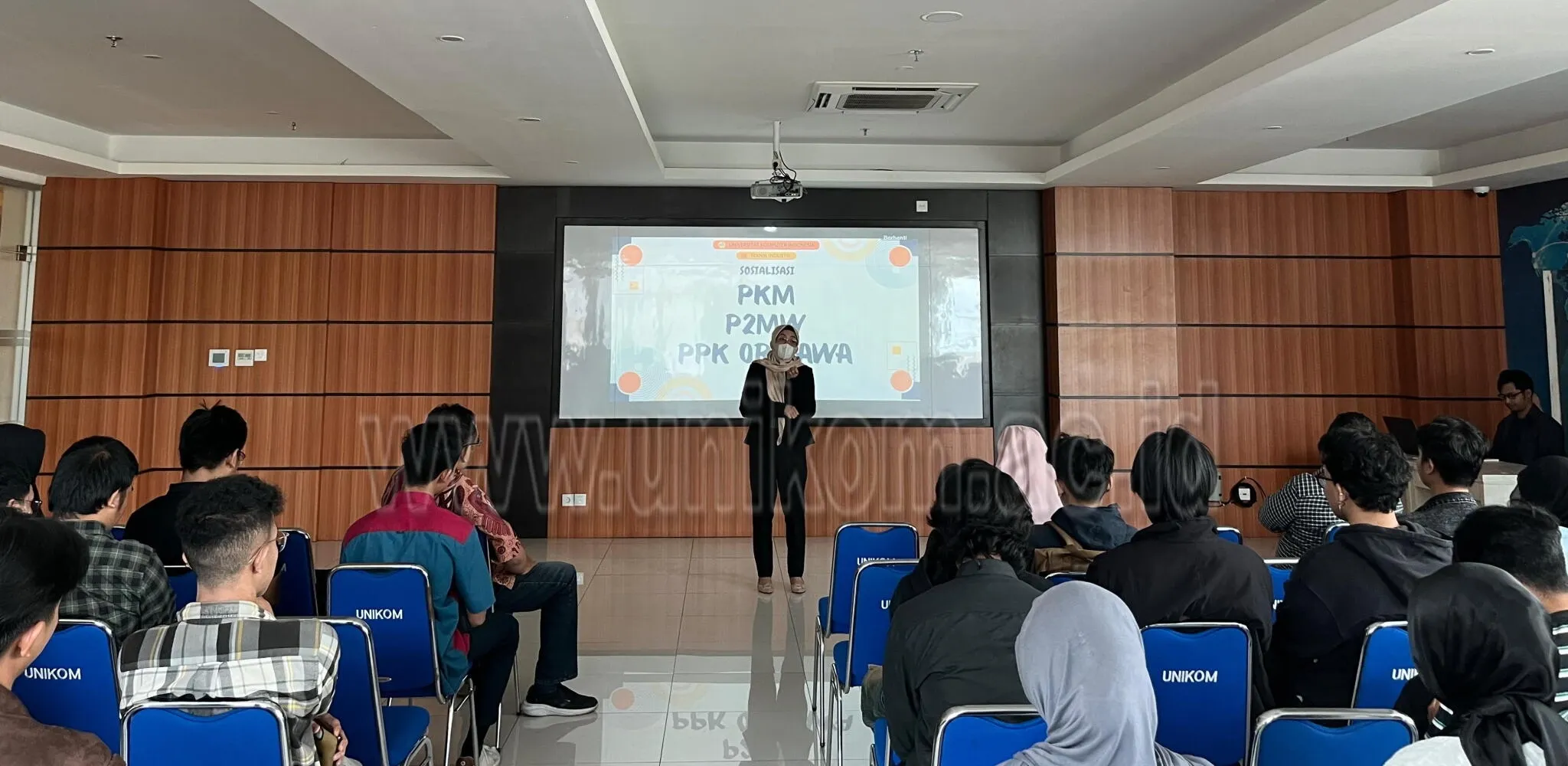
    BANDUNG, UNIKOM – The Industrial Engineering Study Program together with the Industrial Engineering Student Association of the Universitas Komputer Indonesia (UNIKOM) on Thursday, January 2, 2025 held a socialization of the Student Creativity Program (PKM), the Student Organization Capacity Building Program (PPK Ormawa), and the Student Entrepreneurship Development Program (P2MW) with the theme “Socialization of PKM PPK ORMAWA P2MW”. The Chief Executive of this activity, Maretno Marcelina, carried out the activity at L.018 of the UNIKOM smart building.

    This activity aims to facilitate students to develop and realize creative and innovative ideas and strengthen the capacity of student organizations and student empowerment, namely: 1. Increasing Knowledge and Understanding, which aims to provide in-depth information about PKM, P2MW, and PPK Ormawa to students. 2. Encouraging Active Participation of UNIKOM Industrial Engineering Students: This activity is designed to encourage students to be more active in participating in these programs. 3. Building Organizational Skills and Capacity which aims to strengthen the capacity of student organizations by providing technical guidance and strategies in preparing proposals and managing projects.

    This activity was opened with a welcome speech by the Head of the Unikom Industrial Engineering Study Program, Dr. Henny S.T, M.T. In her speech, she said, “PKM is an opportunity for students to develop creative and innovative ideas that can be applied in society. Meanwhile, P2MW will equip students with entrepreneurial skills that are much needed in this era. Finally, PPK Ormawa aims to strengthen our student organizations to be more competitive and able to make positive contributions.” she said.

    Furthermore, She added, “I hope that through this socialization, all students can understand the importance of active participation in these programs. Let’s make the most of this opportunity to hone our skills and explore our potential. I also encourage every student organization to collaborate and support each other in preparing quality proposals. With the spirit of collaboration and innovation, I believe we can achieve extraordinary results.” She concluded.

    The event featured speakers Alam Santosa, S.T., M.T. for the PKM program, Ananda Tasya Bonita Siregar for the PPK Ormawa program, and Rizal Ardian Muslim for the P2MW program. The speakers provided in-depth explanations of the program’s mechanisms, how to prepare proposals, and how to manage projects effectively. 

    This outreach activity is a positive step to encourage UNIKOM Industrial Engineering students to be more active and creative in developing themselves and making positive contributions to society. This activity is also expected to strengthen collaboration between students and student organizations and increase the number of students achieving success in these programs. (Directorate of Hms & Pro)

  • UNIKOM Holds 2025 Outstanding Student Selection At University Level

    UNIKOM Holds 2025 Outstanding Student Selection At University Level

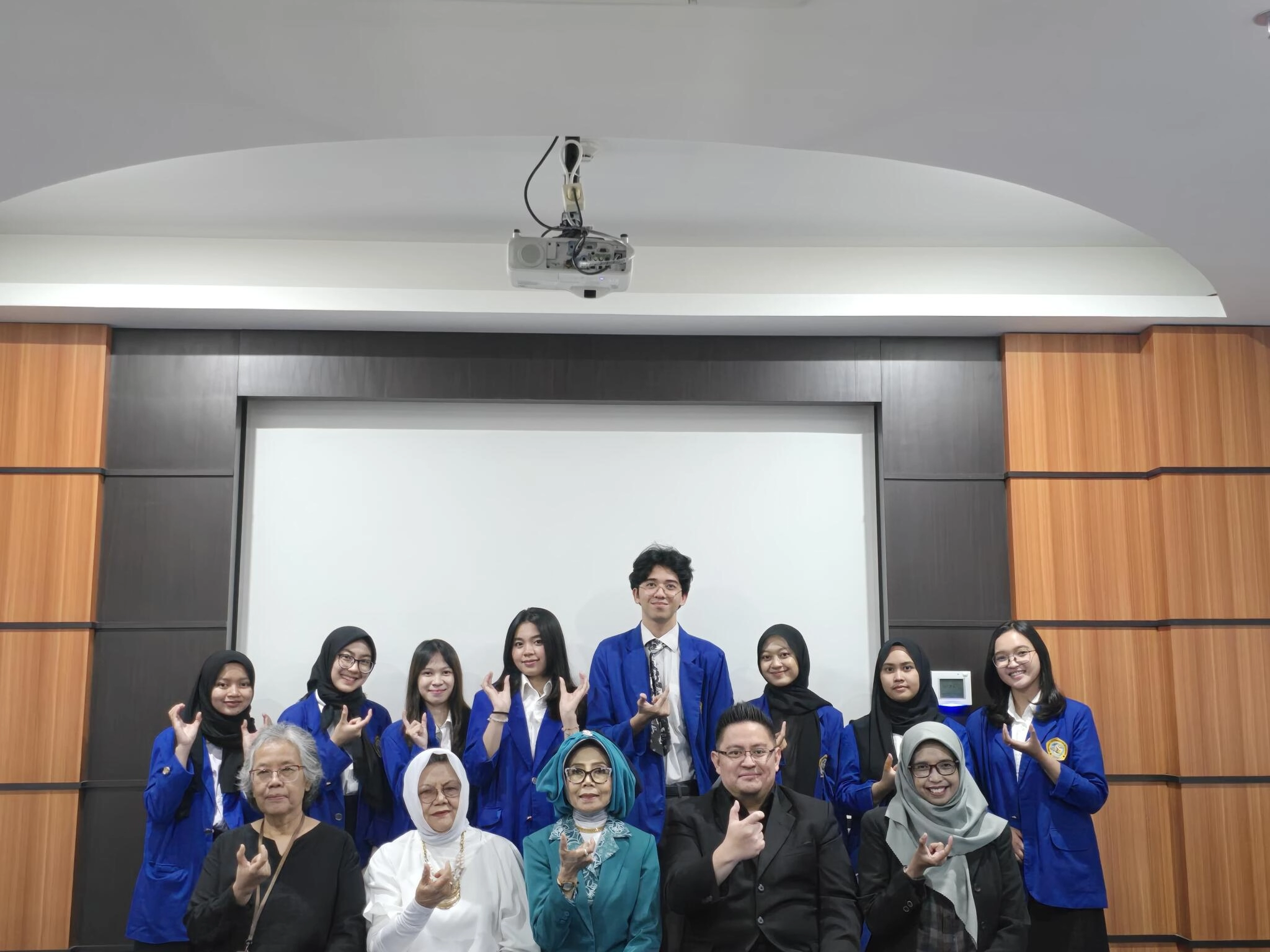
    BANDUNG, UNIKOM – The spirit of achievement once again resonated throughout the University of Computer Science Indonesia (UNIKOM) during the 2025 University-Level Outstanding Student Selection (Pilmapres) event, which was held on Friday, March 21, 2025. This solemn and meaningful event involved five competent judges from various fields of study, namely Prof. Dr. Hj. Umi Narimawati, Dra., SE., M.Si., Prof. Dr. Hj. Aelina Surya, Dra., Prof. Dr. Lia Warlina, ST., MT., Andrias Darmayadi, S.IP., M.Si., Ph.D., and Dr. Retno Purwani Sari, SS., M.Hum.  

    The participants of the University Level Pilmapres were the best students from various faculties at UNIKOM, who have undergone a series of selections at their respective faculties. The winners at the university level will go on to represent UNIKOM at the LLDIKTI Region IV level. The assessment process was carried out in three different rooms. Room L.030 was used to assess Outstanding Achievements (CU) by Prof. Dr. Hj. Umi Narimawati, Dra., SE., M.Si., Prof. Dr. Hj. Aelina Surya, Dra., and Andrias Darmayadi, S.IP., M.Si., Ph.D. Room L.021 was used to assess Creative Idea Papers (GK) by Prof. Dr. Lia Warlina, ST. MT. Meanwhile, Room L.018 was used for interviews and English-language video assessments by Dr. Retno Purwani Sari, SS., M.Hum.  

    UNIKOM Vice Rector I for Academic and Student Affairs Prof. Dr. Hj. Umi Narimawati, Dra., S.E., M.Si, in her speech, said, ” I would like to thank the Directorate of Student Affairs for organizing this event. I hope that whoever wins at the university level will be able to bring UNIKOM’s name to prominence at the LLDIKTI 4 and national levels. After being selected, the students who will represent UNIKOM will continue to be guided so that they can perfect their preparations,” said Prof. Umi.

    After a rigorous evaluation process, the jury has determined the rankings for the 2025 University-Level Outstanding Undergraduate Students (S-1). The following is the list of winners:  

    1). 1st Place: Yudha Putra Pratama, Student ID 63722026, English Literature Program  

    2). 2nd place: Qistan Yusrina Arifah, Student ID 51922147, Visual Communication Design Program  

    3). 3rd place: Yosephine Natania Pash, Student ID 4322006, International Relations Program  

    4). 4th place: Nuke Puri Herminanti, Student ID Number 41822073, Communication Studies Program  

    5). 5th place: Fatimah Zahra Afif, Student ID Number 21222017, Management Program  

    6). 6th place: Satyka Rachmawaty, Student ID 51922115, Visual Communication Design Program  

    6). 7th place: Nadya Nanda Prawila, Student ID Number 10622006, Regional and Urban Planning Study Program  

    7). 8th place: Gischa Sandrina Aulia, Student ID Number 13022004, Civil Engineering Study Program  

    8). In addition, the judges also determined the rankings for the 2025 University Level Diploma (D-3) Outstanding Students, with Syahla Tasya Kamila, Student ID Number 10823002, from the D3 Computer Engineering Study Program, winning first place.  

    The Director of Student Affairs at UNIKOM, Andrias Darmayadi, S.IP. M.Si., Ph.D., also expressed his response to the Pilmapres event: “I would like to thank the entire UNIKOM academic community for supporting the Pilmapres event, as evidenced by all faculties sending their best representatives to compete in the University Level Pilmapres. We hope that this university-level Pilmapres will produce the best students to represent UNIKOM and achieve the best results,” he concluded.

    UNIKOM congratulates the winners and all participants who have shown extraordinary fighting spirit. May this achievement spark new enthusiasm to continue working, inspiring, and bringing pride to UNIKOM on the national stage.